Google Flights leads our ranking with a score of 9.3/10.

- ✓ Price calendar shows cheapest travel dates at a glance
- ✓ Flexible date search across a full month or year
- ✓ Price tracking alerts sent to Gmail
- ✓ Explores map view — find cheap destinations from anywhere
- ✓ No fees — links directly to airlines and OTAs
- ✓ CO2 emissions displayed for each flight option

- ✓ Multi-city and indirect routing search
- ✓ Everywhere search — cheapest destinations from your city
- ✓ Price alerts with 3-month historical context
- ✓ Compare airlines, OTAs, and direct booking
- ✓ Car hire and hotel integrated
- ✓ Price Guarantee: compensation if cheaper fare found
- ✓ Nomad multi-city builder for complex itineraries
- ✓ Find anywhere — explore cheapest destinations
- ✓ Guarantee of cheapest connection routes
- ✓ Weekend and last-minute deal finder
- ✓ Self-transfer booking with missed connection guarantee
- ✓ 40+ languages and currencies supported

- ✓ Hacker Fares — mix airlines for cheaper routes
- ✓ Flexible dates and flexible airports search
- ✓ Price history charts for any route
- ✓ Hotel + flight bundle deals
- ✓ Car rental comparison integrated
- ✓ Trip planner with multi-stop itineraries

- ✓ Consistently surfaces lowest overall prices
- ✓ Mix airlines across legs for best value
- ✓ Month view and 3-month fare calendar
- ✓ CO2 emissions and eco filters
- ✓ 30-day price history chart per route
- ✓ European-owned — strong EU consumer protections
In-Depth Reviews
Google Flights
#1 Pick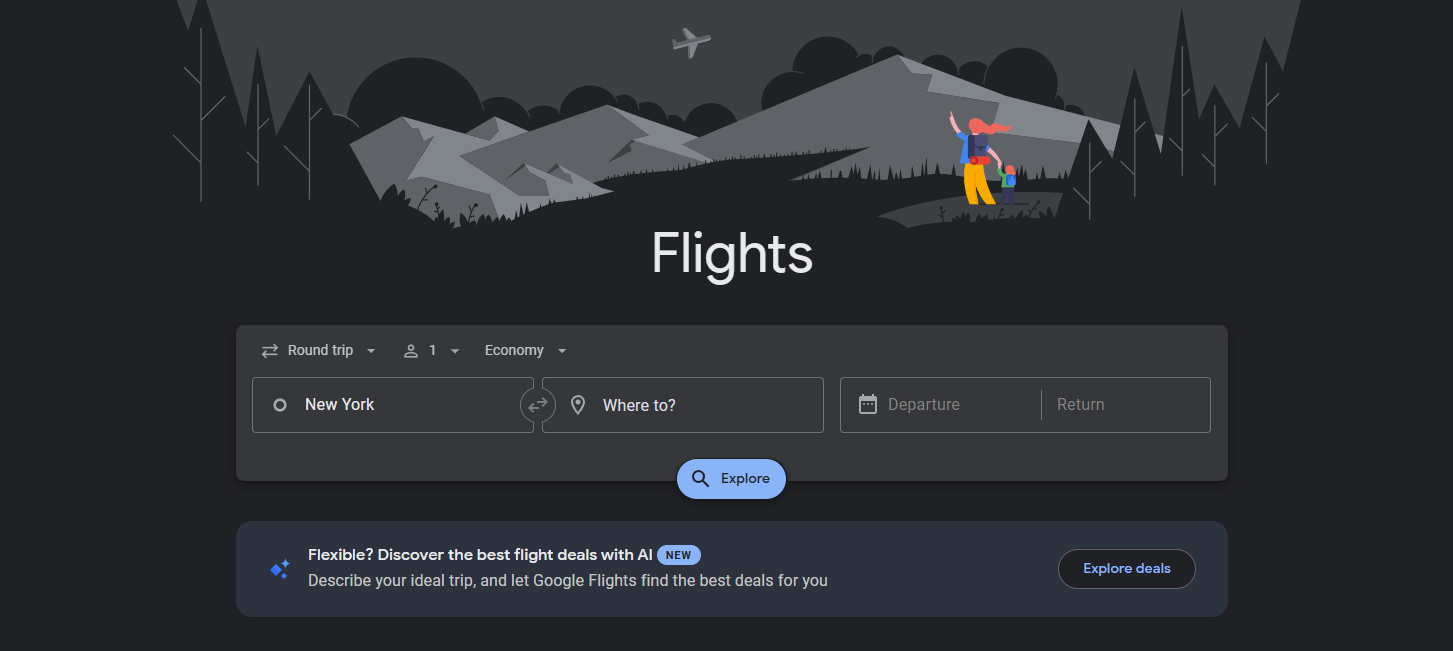
Google Flights is the fastest and most visually intuitive way to search for flights. The price calendar — showing cheapest dates across an entire month — transforms flight shopping from a tedious one-date-at-a-time process into an immediate visual overview. The Explore map lets you enter a departure airport and a budget, then displays every destination you can afford across an interactive world map: one of the most genuinely delightful travel discovery tools ever built.
Critically, Google Flights doesn’t charge booking fees and links directly to airlines and OTAs, meaning prices are real and transparent. Price tracking emails alert you to drops on saved routes. CO2 emissions are displayed per flight, a feature increasingly valued by eco-conscious travelers. The main gap: Google Flights focuses on flights and doesn’t meaningfully compare hotel or ground transport bundles the way Kayak does.
Positive
- ✅ Price calendar shows cheapest travel dates instantly
- ✅ Explore map finds affordable destinations visually
- ✅ Price tracking alerts sent directly to your Gmail
- ✅ No booking fees — links directly to airlines
- ✅ CO2 emissions displayed for eco-aware choices
- ✅ Fast, clean interface — results in under 2 seconds
Negatives
- ✗ Limited hotel and bundle comparison vs. Kayak
- ✗ Some budget airlines missing from results
- ✗ No Price Guarantee or compensation feature
Skyscanner
#2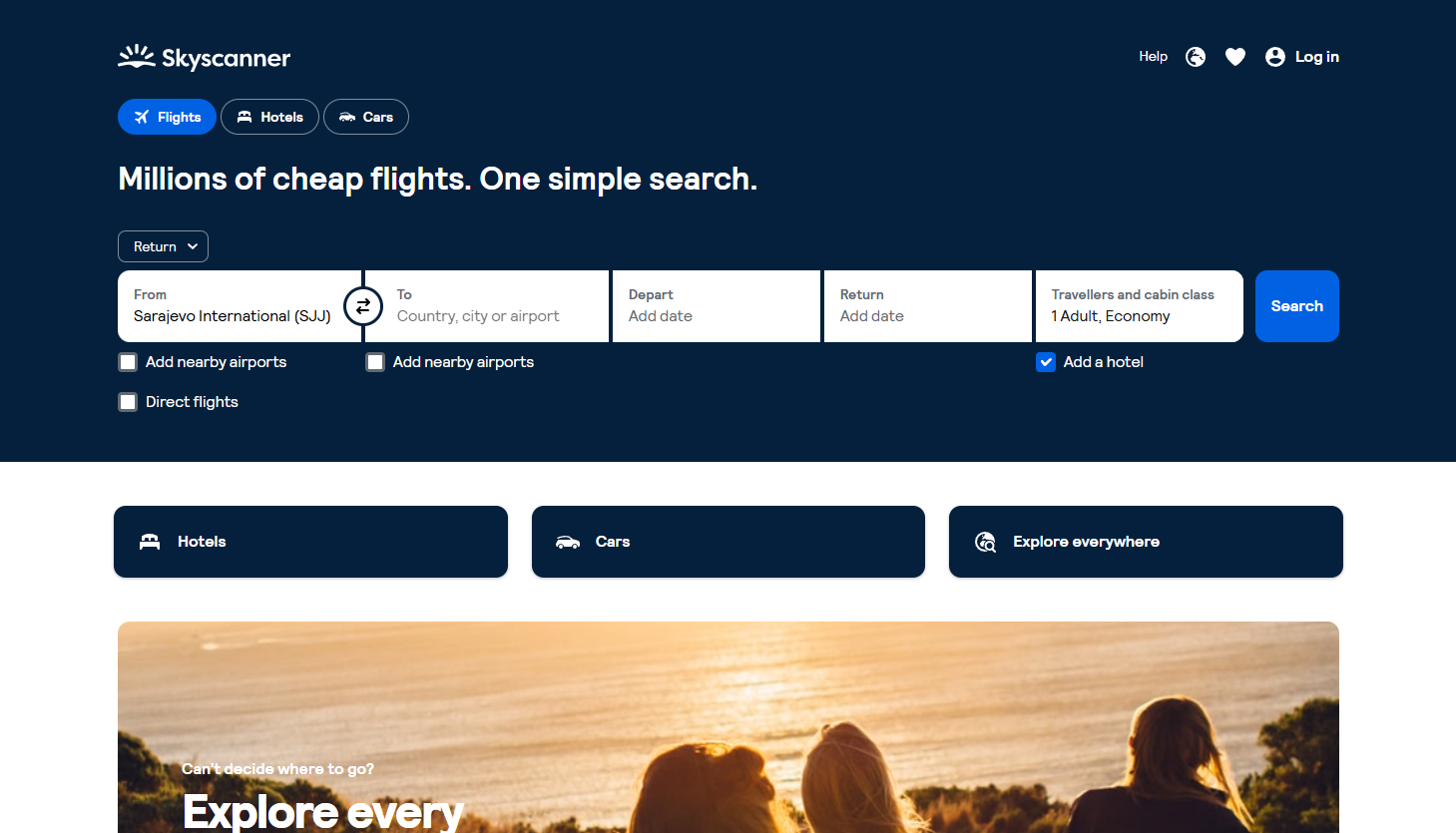
Skyscanner pioneered the ‘Everywhere’ destination search — type your departure city, select ‘Everywhere’ as your destination, and see the cheapest places you can currently fly to on any given month. This discovery-first approach has inspired every competitor and remains best-in-class for spontaneous travel planning. The Price Guarantee feature, which offers compensation if you find a cheaper fare after booking through Skyscanner, adds a layer of confidence that Google can’t match.
Multi-city routing and indirect flight comparison are both strong. Car hire and hotel search are integrated. Price alerts include 3-month historical context so you can see whether today’s fare is actually a good deal or just normal pricing. For budget-conscious travelers who value flexibility over convenience, Skyscanner consistently surfaces fares that centralized platforms miss.
Positive
- ✅ Everywhere search pioneered destination discovery
- ✅ Price Guarantee — compensation if cheaper fare found post-booking
- ✅ 3-month historical price context for alerts
- ✅ Strong car hire and hotel integration
- ✅ Multi-city and indirect routing comparison
- ✅ Comprehensive airline and OTA coverage
Negatives
- ✗ Some OTA redirects add fees not shown upfront
- ✗ Interface has become more cluttered with ads
- ✗ Price Guarantee has booking restrictions
Kiwi.com
#3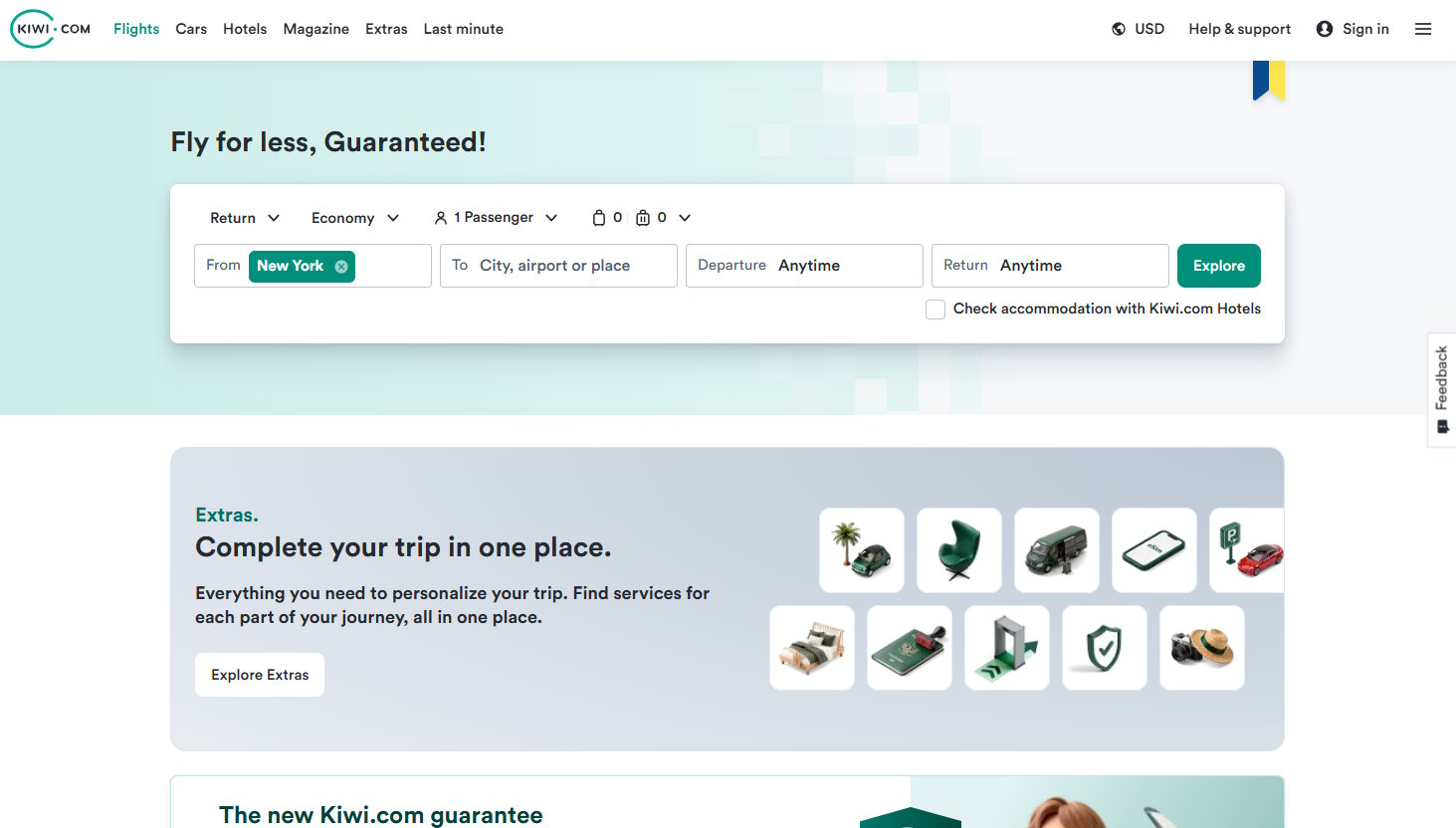
Kiwi.com rounds out our top 5 with solid basic functionality.
Positive
- ✅ Nomad multi-city builder for complex itineraries
- ✅ Find anywhere — explore cheapest destinations
- ✅ Guarantee of cheapest connection routes
Negatives
- ✗ Limited advanced features
Kayak
#4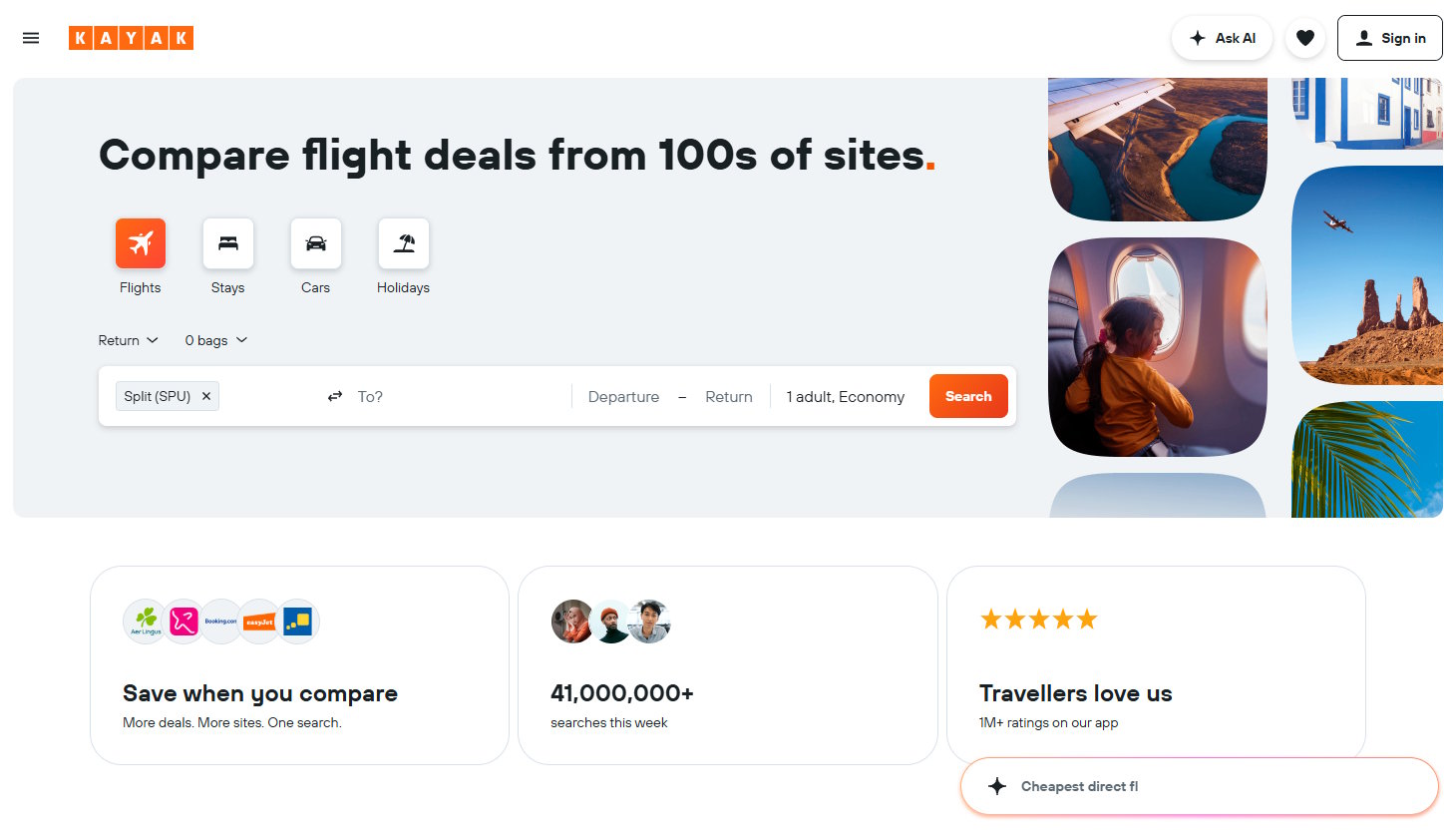
Kayak earns its place through feature density that no single competitor matches. Hacker Fares — splitting a journey across different airlines for each leg — can deliver savings impossible to find through any single-airline booking. The trip planner handles complex multi-stop itineraries. Flexible airport search expands results to include nearby airports automatically. Hotel, flight, and car rental bundle deals are genuinely competitive.
Price history charts let you assess whether a fare is high or low relative to its recent range. The Travel Restrictions tracker (useful for international travel) and trip credit tracking for existing bookings add utility that pure flight-search tools don’t attempt. Kayak is the power traveler’s tool — higher in features, more overwhelming for casual users, but unmatched for complex itineraries.
Positive
- ✅ Hacker Fares mix airlines across legs for maximum savings
- ✅ Flexible airports automatically includes nearby alternatives
- ✅ Price history charts for every route
- ✅ Trip planner handles complex multi-stop journeys
- ✅ Hotel + flight bundle deals are competitive
- ✅ Travel restrictions and visa information built-in
Negatives
- ✗ Interface is busier and less intuitive than Google Flights
- ✗ Some prices shown differ from final booking total
- ✗ Free cancellation filter doesn't always work accurately
Momondo
#5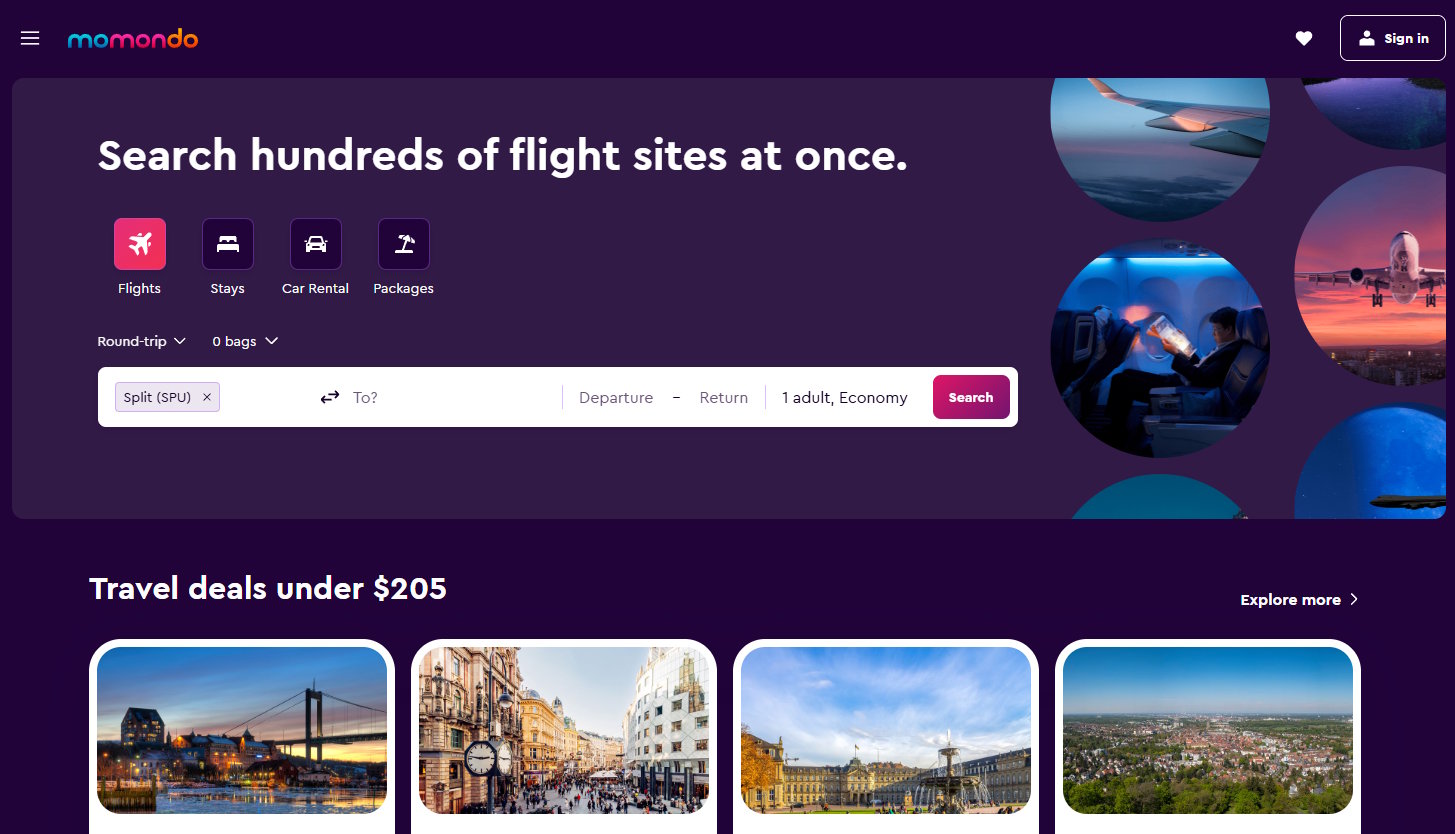
Momondo is the budget traveler’s secret weapon. Consistently surfacing fares that Google Flights and Skyscanner miss, Momondo’s search algorithm casts a wider net across OTAs and regional booking platforms that larger competitors overlook. Being European-owned brings strong EU consumer protection defaults and a focus on transparency that matters for price-sensitive travelers.
The ability to mix airlines across journey legs (similar to Kayak’s Hacker Fares) and a full 30-day fare calendar per route make it ideal for maximizing flexibility. CO2 emissions and eco filters cater to environmentally conscious travelers. For travelers willing to spend an extra 5 minutes comparing across multiple tools, adding Momondo to the mix regularly uncovers the cheapest total fare.
Positive
- ✅ Consistently lowest prices — finds deals others miss
- ✅ Mix airlines across legs for best value
- ✅ 30-day fare calendar per route
- ✅ EU-owned with strong consumer protections
- ✅ CO2 and eco flight filters
- ✅ Clean, uncluttered interface
Negatives
- ✗ Fewer hotels and bundles than Kayak
- ✗ Some redirects to unfamiliar OTAs
- ✗ Less polished mobile experience
Our Testing Methodology
We tested each engine with 50 flight searches across 10 routes (short-haul, long-haul, budget, premium, flexible dates). Scored on: lowest fare found (35%), search flexibility features (25%), UX and speed (20%), hotel/bundle integration (10%), and extras like alerts and history (10%). Prices cross-checked against airline direct booking.