Crunchbase leads our ranking with a score of 9.2/10.

- ✓ Most comprehensive startup and funding database
- ✓ 80M+ company profiles with investment history
- ✓ Investor portfolio and fund tracking
- ✓ Acquisition and merger history
- ✓ Technology stack detection per company
- ✓ API for CRM and data enrichment

- ✓ Most comprehensive VC/PE fund data
- ✓ Deal-level data for every transaction type
- ✓ LP commitments and fund performance benchmarks
- ✓ Pre-IPO and late-stage valuation tracking
- ✓ League tables for investment firms
- ✓ Used by institutional investors and PE professionals

- ✓ Startup job board + investor network in one
- ✓ 35,000+ startups and 4M+ investor connections
- ✓ Syndicate investment for accredited investors
- ✓ Salary transparency for startup roles
- ✓ Equity data for startup compensation comparison
- ✓ Rebranded as Wellfound for jobs, AngelList for investing

- ✓ European and global startup ecosystem focus
- ✓ 450,000+ companies across 30+ countries
- ✓ Round-by-round funding visualization
- ✓ Investor and co-investor network mapping
- ✓ Trend analysis by geography and sector
- ✓ Free basic access

- ✓ 1.5M+ startups and innovation companies tracked
- ✓ Deep-dive company reports with 150+ data points
- ✓ Investor and acquirer search
- ✓ Sector-specific startup databases
- ✓ VC and corporate VC portfolio tracking
- ✓ API for startup intelligence automation
In-Depth Reviews
Crunchbase
#1 Pick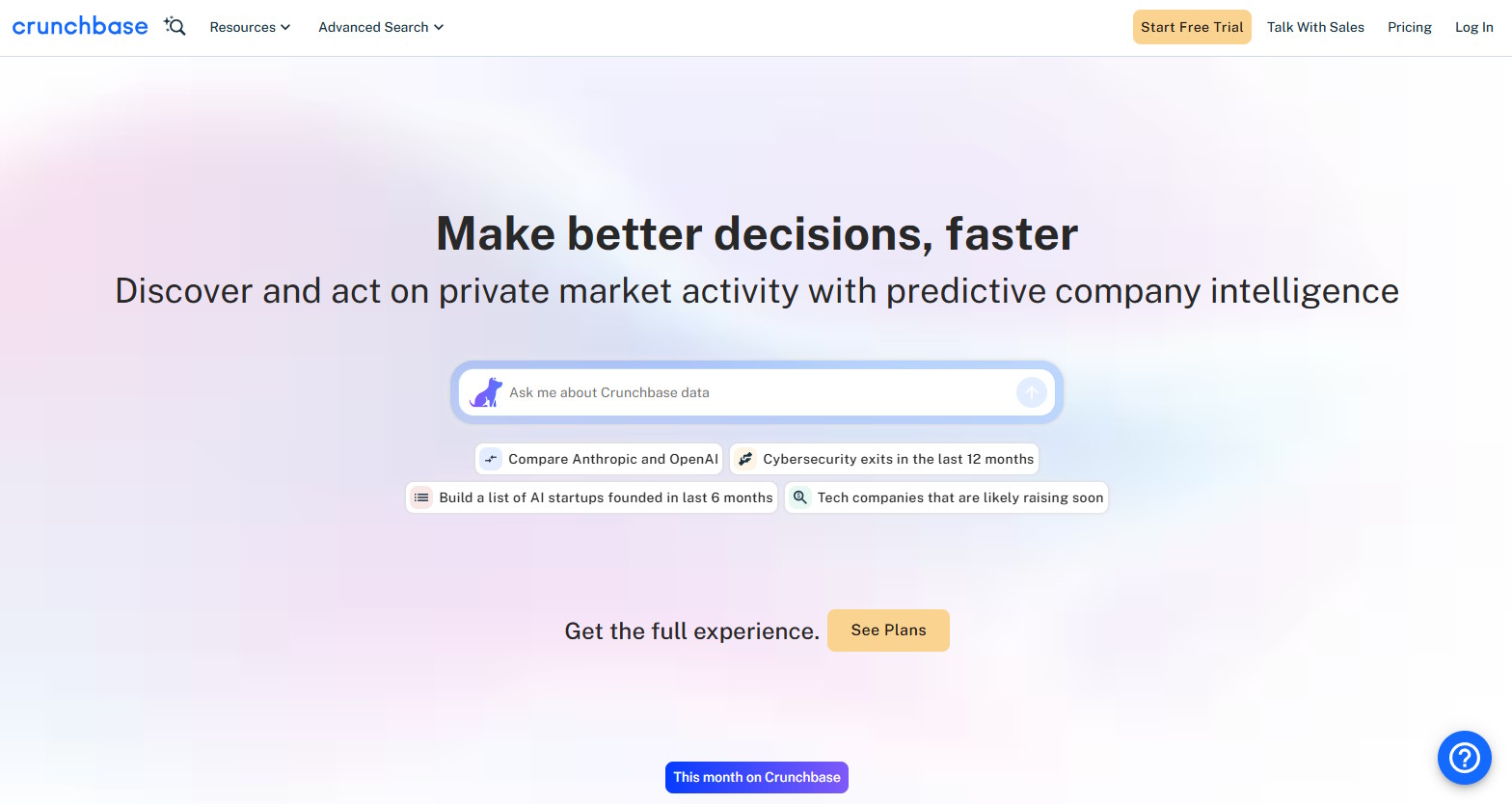
Crunchbase is the most widely used startup intelligence platform, covering 80M+ companies with funding rounds, investor portfolios, acquisition history, and executive data. For founders doing competitive research, investors sourcing deals, and sales teams targeting high-growth companies, it’s the first stop in the startup research workflow.
The technology stack detection feature shows what software and services a company currently uses — invaluable for SaaS sales teams targeting companies about to need a competitive switch. Funding round data updates within days of public announcements, usually cross-referenced against SEC Form Ds and press releases. The Pro API enables automated CRM enrichment, keeping sales and recruiting databases current without manual updates.
Positive
- ✅ 80M+ company profiles — most comprehensive startup database
- ✅ Technology stack detection for sales intelligence
- ✅ Funding rounds updated within days of announcements
- ✅ Investor portfolio and fund relationship mapping
- ✅ Acquisition and merger history
- ✅ API for automated CRM and database enrichment
Negatives
- ✗ Full contact data and API require paid Pro subscription
- ✗ Less comprehensive for non-VC-backed private companies
- ✗ Some funding data relies on self-reporting

PitchBook
#2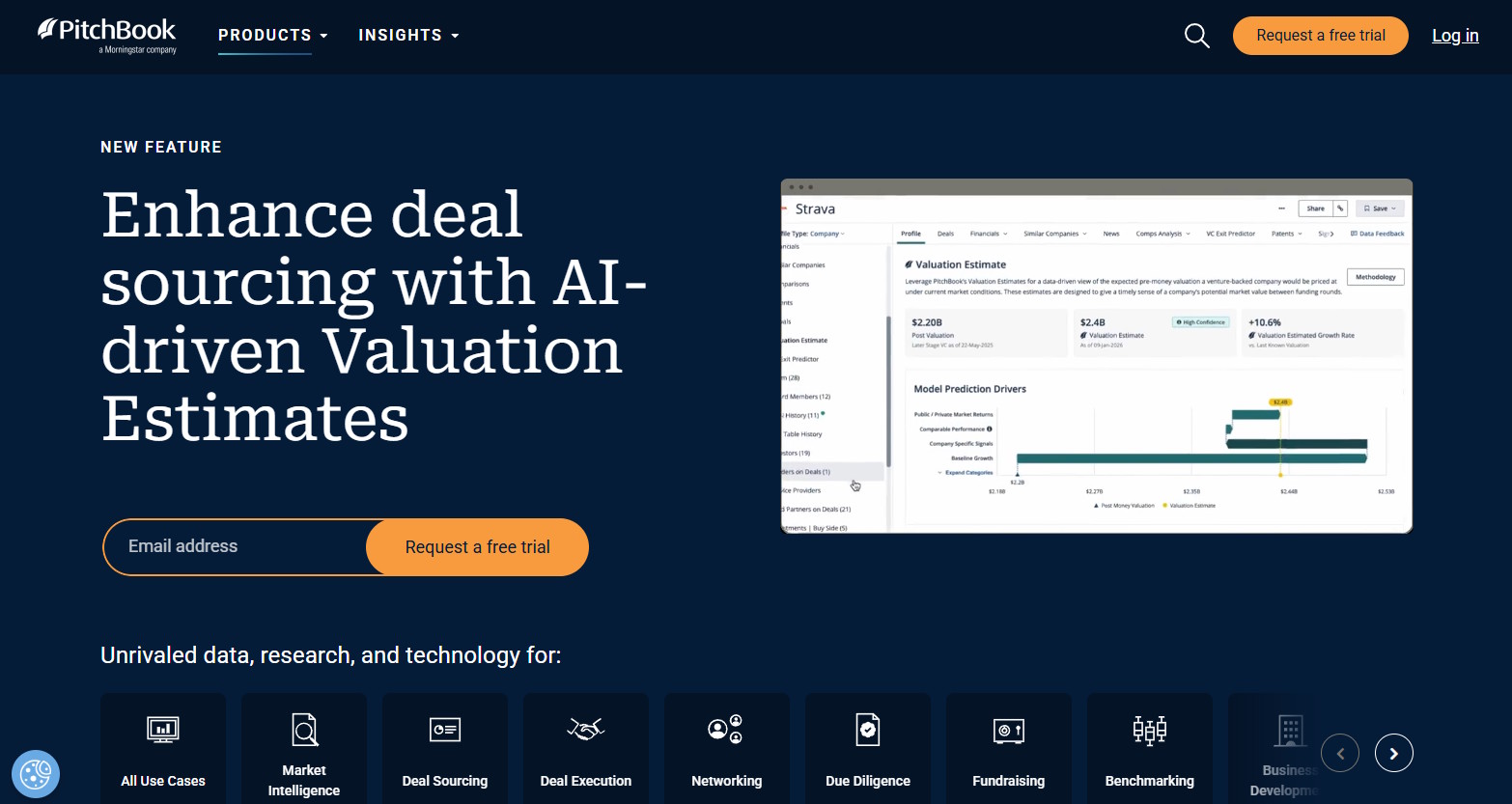
PitchBook is the institutional investor’s data platform — the tool that VC partners, PE associates, and investment bankers reach for when decisions require the most comprehensive capital markets data available. With deal-level data for every transaction type (VC, PE, M&A, IPO, SPAC), LP commitment records, and fund performance benchmarks, it operates in a category of one for institutional-grade investment research.
League tables rank investment firms by deal count, capital deployed, and sector focus. Pre-IPO valuation tracking helps public market investors build positions before listings. The depth of fund-level data — carried interest structures, GP economics, historical performance — is information that simply doesn’t exist anywhere else at scale. PitchBook’s pricing ($25,000–40,000/year) reflects its indispensability to the institutional users who rely on it.
Positive
- ✅ Most comprehensive VC/PE fund-level data available
- ✅ LP commitment and fund performance benchmarks
- ✅ Deal-level data for every transaction type
- ✅ Pre-IPO valuation tracking
- ✅ League tables for competitive investment firm analysis
- ✅ Used by leading institutional investors and PE firms
Negatives
- ✗ Extremely expensive — institutional pricing only
- ✗ Overkill for startup founders and SMB users
- ✗ Steep learning curve for full platform utilization
AngelList
#3
AngelList (now split into AngelList for investing and Wellfound for jobs) occupies a unique position at the intersection of startup investing and hiring. With 35,000+ active startups and connections to 4M+ investors, it’s the platform where early-stage fundraising and early-stage hiring both happen. Salary and equity transparency for startup roles makes compensation comparison possible in a market where information asymmetry has historically favored employers.
The syndicate investment feature allows accredited investors to co-invest with leading angels in deals they wouldn’t otherwise access. For founders, listing on AngelList signals credibility and creates discoverability for both investors and talent. The combined jobs and investment network creates a flywheel effect that makes it the densest early-stage startup ecosystem in one platform.
Positive
- ✅ 35,000+ active startup listings for job seekers and investors
- ✅ Salary and equity transparency for startup compensation
- ✅ Syndicate investment access for accredited investors
- ✅ Direct connection to founder-investor network
- ✅ Early-stage deal flow not on Crunchbase yet
- ✅ Most active early-stage startup community online
Negatives
- ✗ Less useful for late-stage or pre-IPO company research
- ✗ Job board crowded — signal-to-noise ratio mixed
- ✗ Angel investing features restricted to accredited investors

Dealroom
#4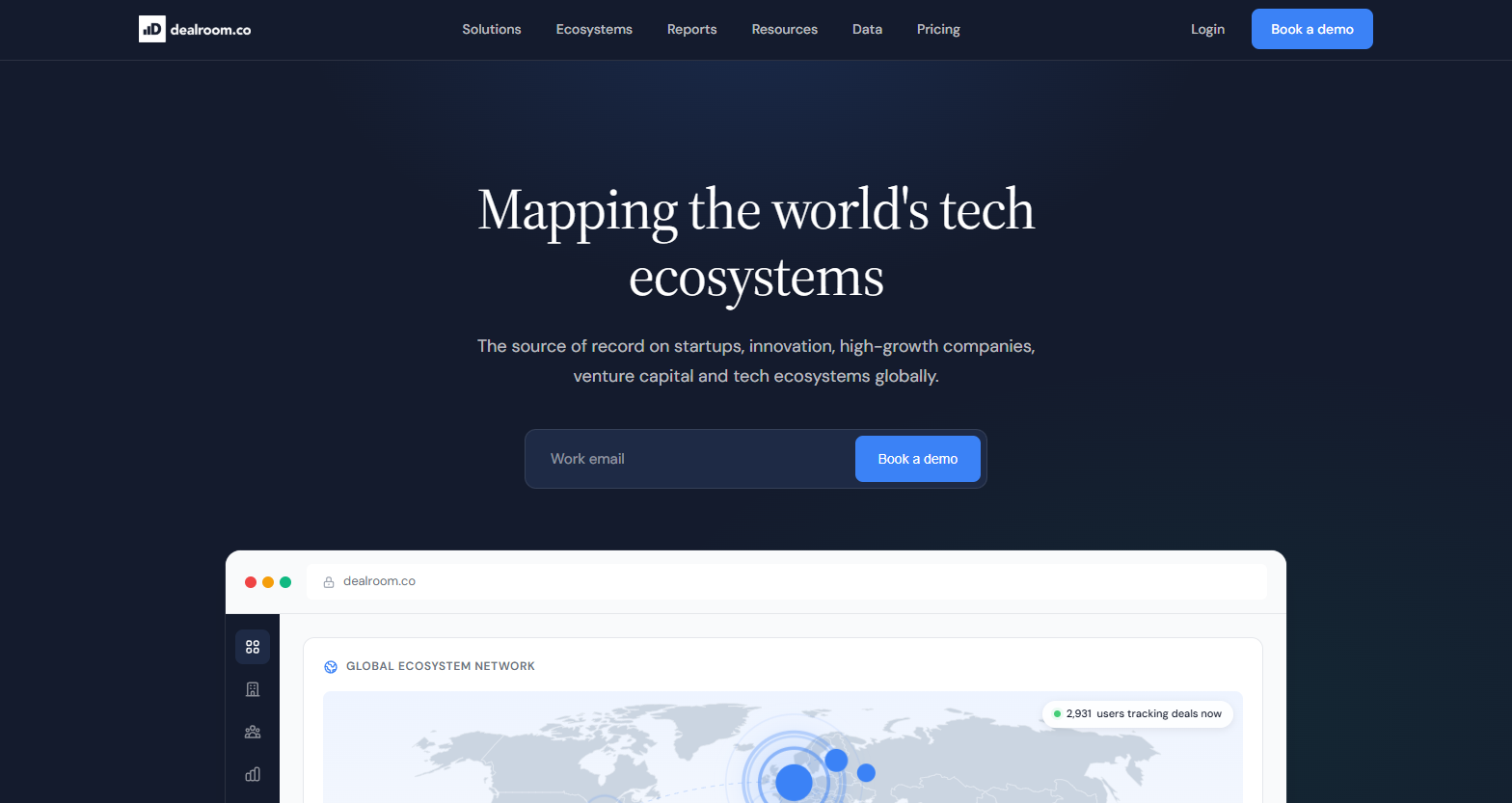
Dealroom rounds out our top 5.
Positive
- ✅ European and global startup ecosystem focus
- ✅ 450,000+ companies across 30+ countries
- ✅ Round-by-round funding visualization
Negatives
- ✗ Limited advanced features

Tracxn
#5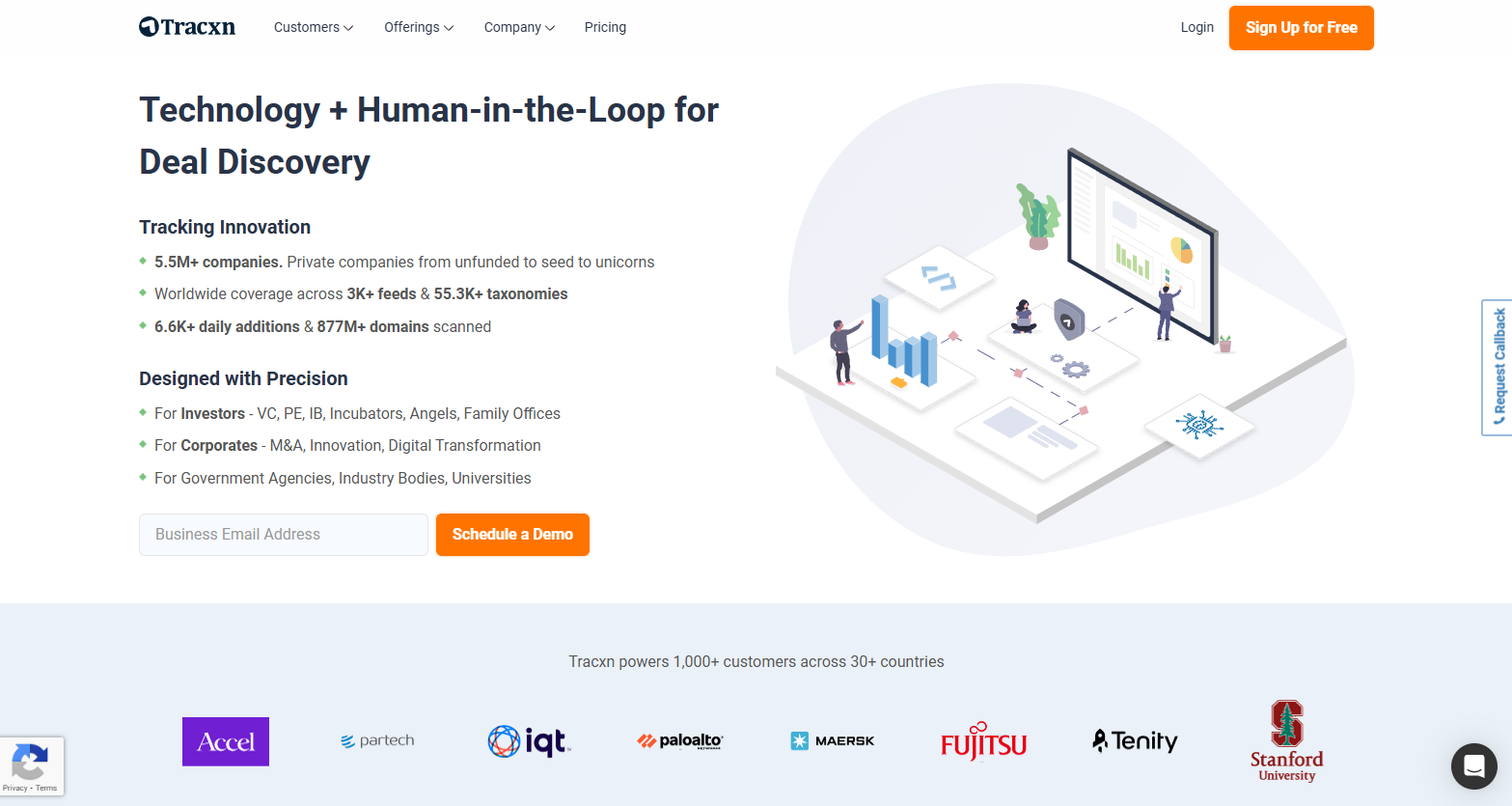
Tracxn focuses on depth over breadth: 1.5M+ startups with 150+ data points per company, sector-specific reports compiled by analysts, and deep coverage of corporate venture activity. For corporate innovation teams, strategic investors, and researchers who need nuanced sector intelligence rather than raw startup counts, Tracxn’s analytical approach provides context that pure databases lack.
The VC and CVC portfolio tracking enables systematic competitive intelligence across any innovation ecosystem. Investor search identifies who is actively funding companies in specific sectors, making fundraising research faster and more targeted. The sector-specific databases — covering fintech, healthtech, enterprise SaaS, and others — are regularly updated by Tracxn’s analyst team, distinguishing them from automated aggregation.
Positive
- ✅ 150+ data points per company — deepest profile depth
- ✅ Analyst-compiled sector reports add context
- ✅ Corporate VC and strategic investor tracking
- ✅ Sector-specific startup databases
- ✅ Investor search by active sector and stage
- ✅ API for innovation intelligence automation
Negatives
- ✗ Smaller company coverage than Crunchbase
- ✗ Less brand recognition than top-tier platforms
- ✗ Some data relies on manual analyst updates
Our Testing Methodology
We tested each platform across 4 research use cases: deal discovery (finding active startups in a sector), investor identification (finding VCs investing in a space), competitive analysis, and executive tracking. Scored on data accuracy (35%), coverage breadth (25%), analytics features (20%), UX (10%), and pricing value (10%).