Zillow leads our ranking with a score of 9.2/10.

- ✓ 110M+ US property listings and estimates
- ✓ Zestimate: AI-powered property valuation tool
- ✓ Real-time map search with school ratings
- ✓ Mortgage calculator and affordability tools
- ✓ Zillow Offers instant cash buying program
- ✓ 3D Home tours and floor plan views

- ✓ MLS-sourced listings — most accurate active data
- ✓ Directly connected to local realtor associations
- ✓ Detailed neighborhood market stats
- ✓ 'Just Listed' alerts within 15 minutes
- ✓ Agent match and connect tools
- ✓ School district ratings and boundary maps

- ✓ Buyer rebates — Redfin agents charge lower commissions
- ✓ Real-time MLS updates — listings within 5 minutes
- ✓ Hot Homes: AI predicts which listings sell fastest
- ✓ Redfin Estimate: comparable accuracy to Zestimate
- ✓ Agent and tour scheduling within the app
- ✓ Walkability, transit, and bike scores integrated
- ✓ Neighborhood insights: crime, noise, commute data
- ✓ School ratings and parent reviews
- ✓ Rental + for-sale listings in one search
- ✓ 'What Locals Say' qualitative neighborhood intel
- ✓ Climate risk: flood, fire, wind data per address
- ✓ Pet-friendly and lifestyle search filters

- ✓ Growing database — 50M+ listings
- ✓ Simple, fast search interface
- ✓ Agent matching and market insights
- ✓ New construction listings well represented
- ✓ Price-reduced alert notifications
- ✓ Mobile-first design
In-Depth Reviews
Zillow
#1 Pick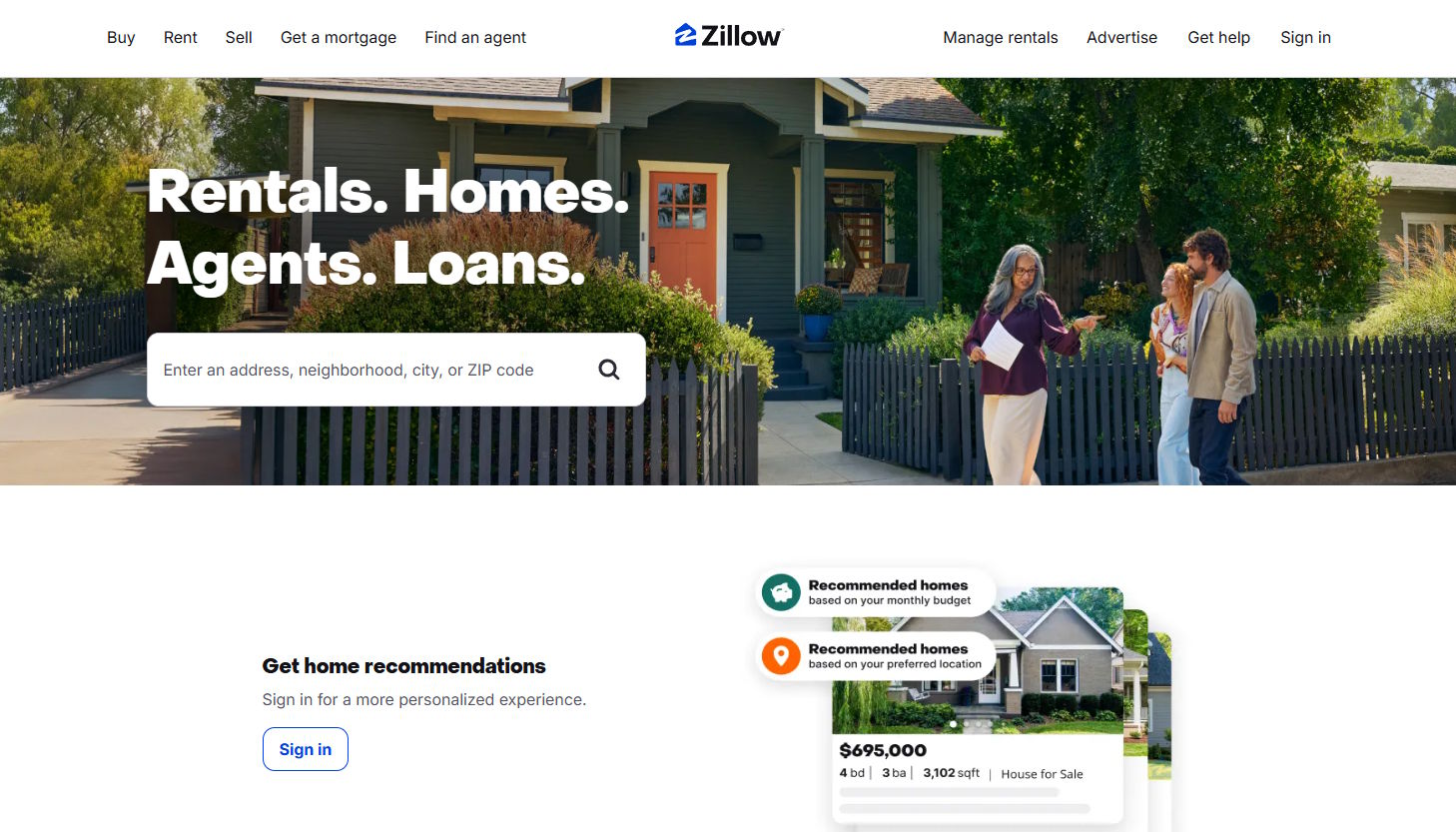
Zillow is the most visited real estate website in the United States for a reason: it combines the largest property database (110M+ listings, including off-market homes) with the most consumer-facing features of any platform. The Zestimate — AI-powered property valuation — gives buyers and sellers an instant price anchor that has become the cultural shorthand for ‘what is this house worth?’ 3D Home tours let buyers explore properties remotely with floor-plan-level detail.
The integrated mortgage calculator, affordability tools, and school ratings make Zillow a one-stop research environment for serious buyers. The weakness is listing freshness — Zillow aggregates from MLS and direct feeds but doesn’t always update as quickly as Realtor.com. Some listings marked ‘For Sale’ are already under contract. For breadth and discovery, Zillow is the starting point. For accuracy, always verify with Realtor.com.
Positive
- ✅ 110M+ property database — widest coverage including off-market
- ✅ Zestimate AI valuation is the industry reference point
- ✅ 3D Home tours and floor plan views
- ✅ School ratings, mortgage tools, and affordability calculator
- ✅ Zillow Offers for instant cash purchase option
- ✅ Map search with neighborhood data overlays
Negatives
- ✗ Listing freshness lags MLS — some sold homes shown as active
- ✗ Zestimate accuracy varies significantly by market
- ✗ Agent recommendations are pay-to-play placements
Realtor.com
#2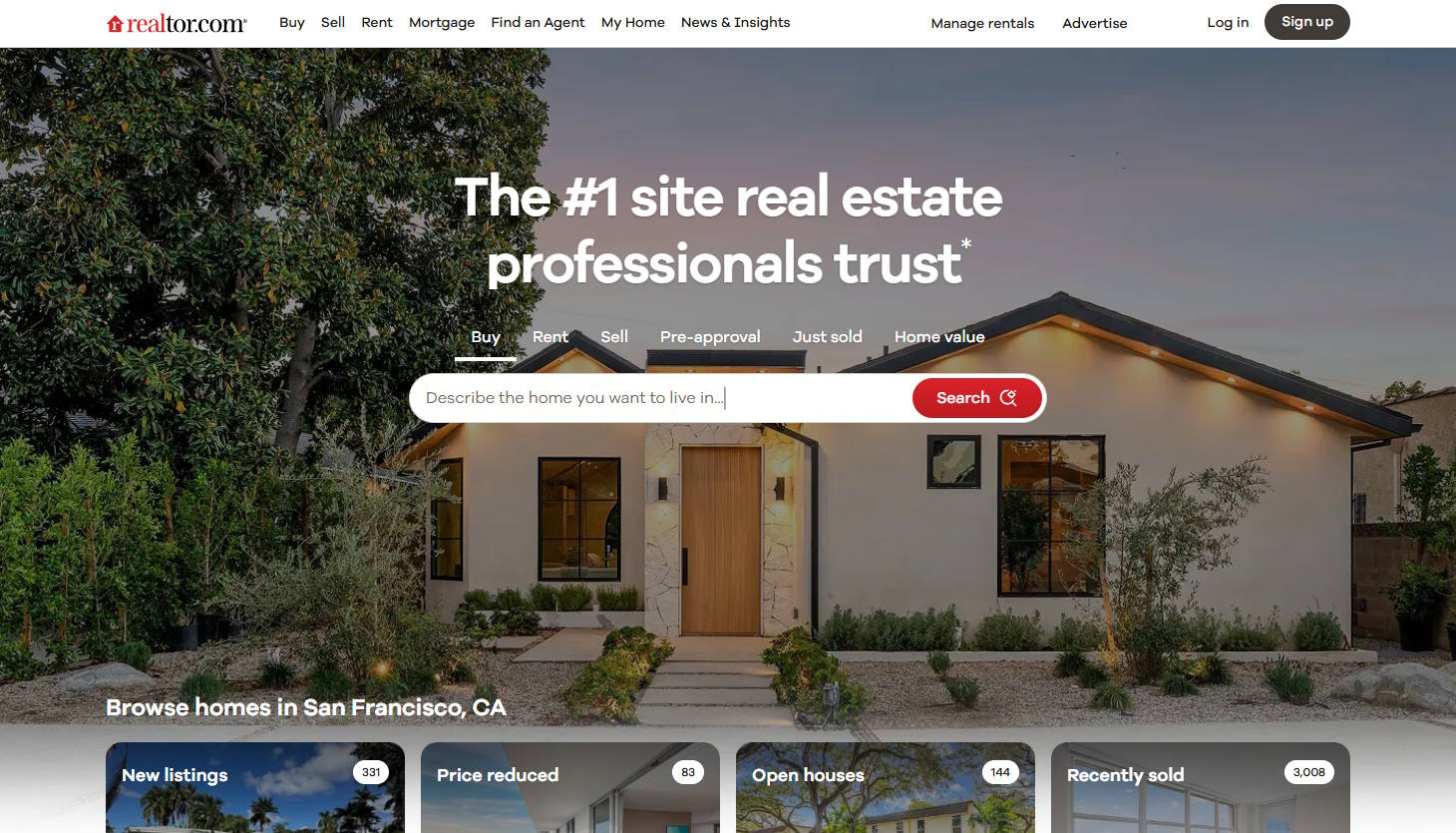
Realtor.com has one structural advantage that no competitor can match: it’s operated by Move, Inc., which has direct data licensing agreements with MLS organizations across the country. This means listings update within 15 minutes of MLS changes — far faster than Zillow’s typical lag. For buyers in competitive markets where homes sell in hours, this freshness advantage is measurable in real money.
Neighborhood market statistics — days on market, sale-to-list ratios, and inventory trends — are detailed and current. The ‘Just Listed’ alert system fires within minutes. Agent matching tools connect buyers with local agents familiar with specific micro-markets. For the serious buyer who wants maximum listing accuracy and market intelligence, Realtor.com’s MLS-direct feeds make it the professional’s tool of choice.
Positive
- ✅ MLS-direct data — listings update within 15 minutes
- ✅ Most accurate active listing status of any platform
- ✅ Detailed neighborhood market statistics
- ✅ 'Just Listed' alerts in near real-time
- ✅ Agent matching with local specialists
- ✅ School district ratings and boundary maps
Negatives
- ✗ Less visually modern than Zillow
- ✗ Zestimate equivalent is less established in buyer/seller mindshare
- ✗ Off-market and sold-home database smaller than Zillow

Redfin
#3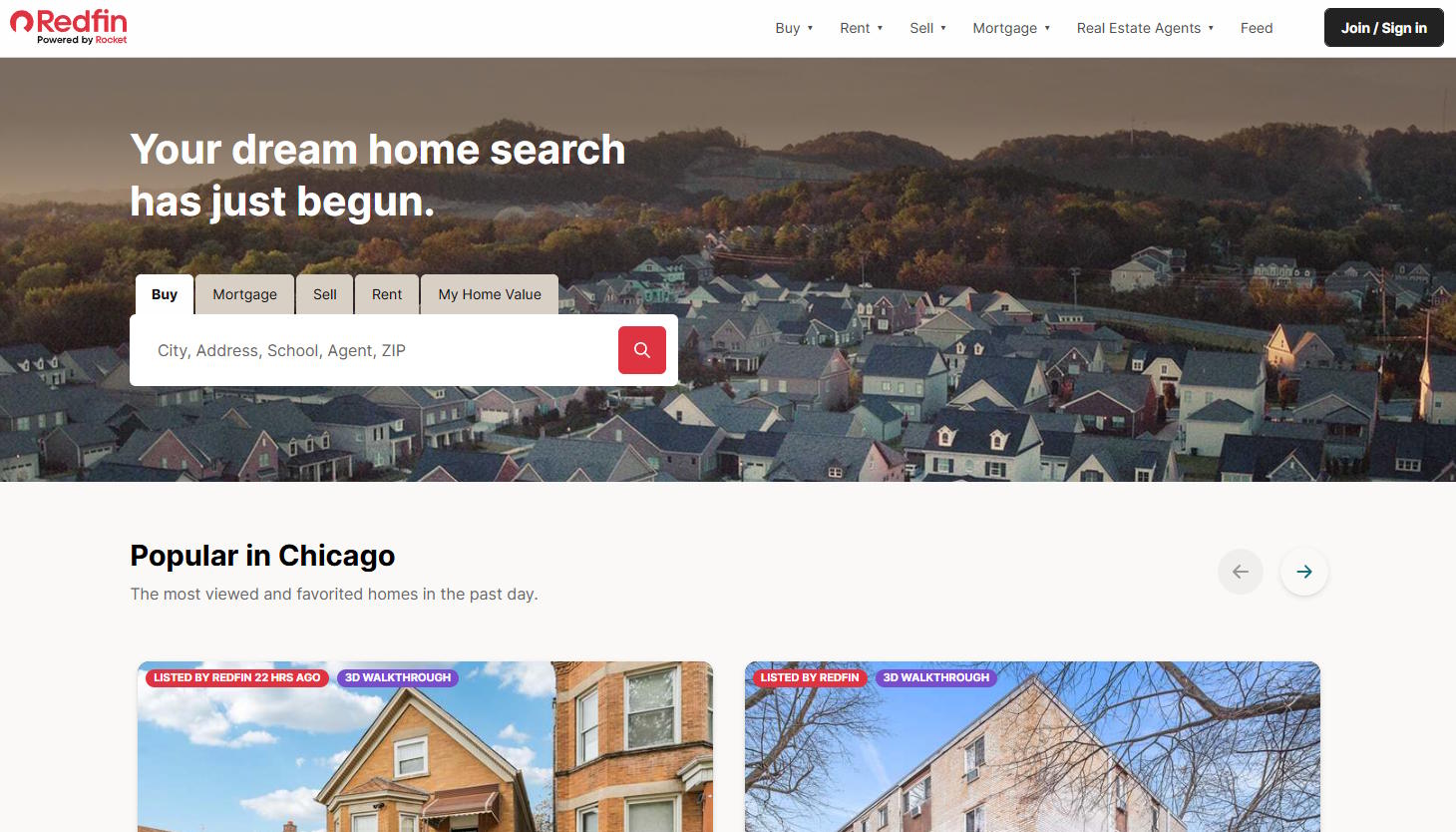
Redfin disrupted the real estate agent industry with a simple value proposition: lower commissions (1.5% listing fee vs. the traditional 3%) with technology-driven service. For buyers, this translates into rebates in most markets. The Hot Homes AI feature predicts which listings are likely to sell within days, letting buyers prioritize their tour schedule intelligently rather than touring properties already under contract.
Real-time MLS updates within 5 minutes match Realtor.com’s freshness. Walkability, transit, and bike scores are integrated directly. The agent scheduling and tour booking within the app is the most streamlined of any platform. The trade-off: Redfin agents handle more clients simultaneously than traditional agents, which can mean less personalized service for clients who prefer high-touch guidance.
Positive
- ✅ Lower commissions — buyer rebates in most markets
- ✅ Hot Homes AI predicts which listings sell fastest
- ✅ Real-time MLS updates within 5 minutes
- ✅ In-app agent scheduling and tour booking
- ✅ Walkability, transit, and bike scores integrated
- ✅ Redfin Estimate is independently accurate
Negatives
- ✗ Agents handle higher client volume — less personalized service
- ✗ Agent quality more variable than traditional full-service brokers
- ✗ Rebates have restrictions and minimum home prices
Trulia
#4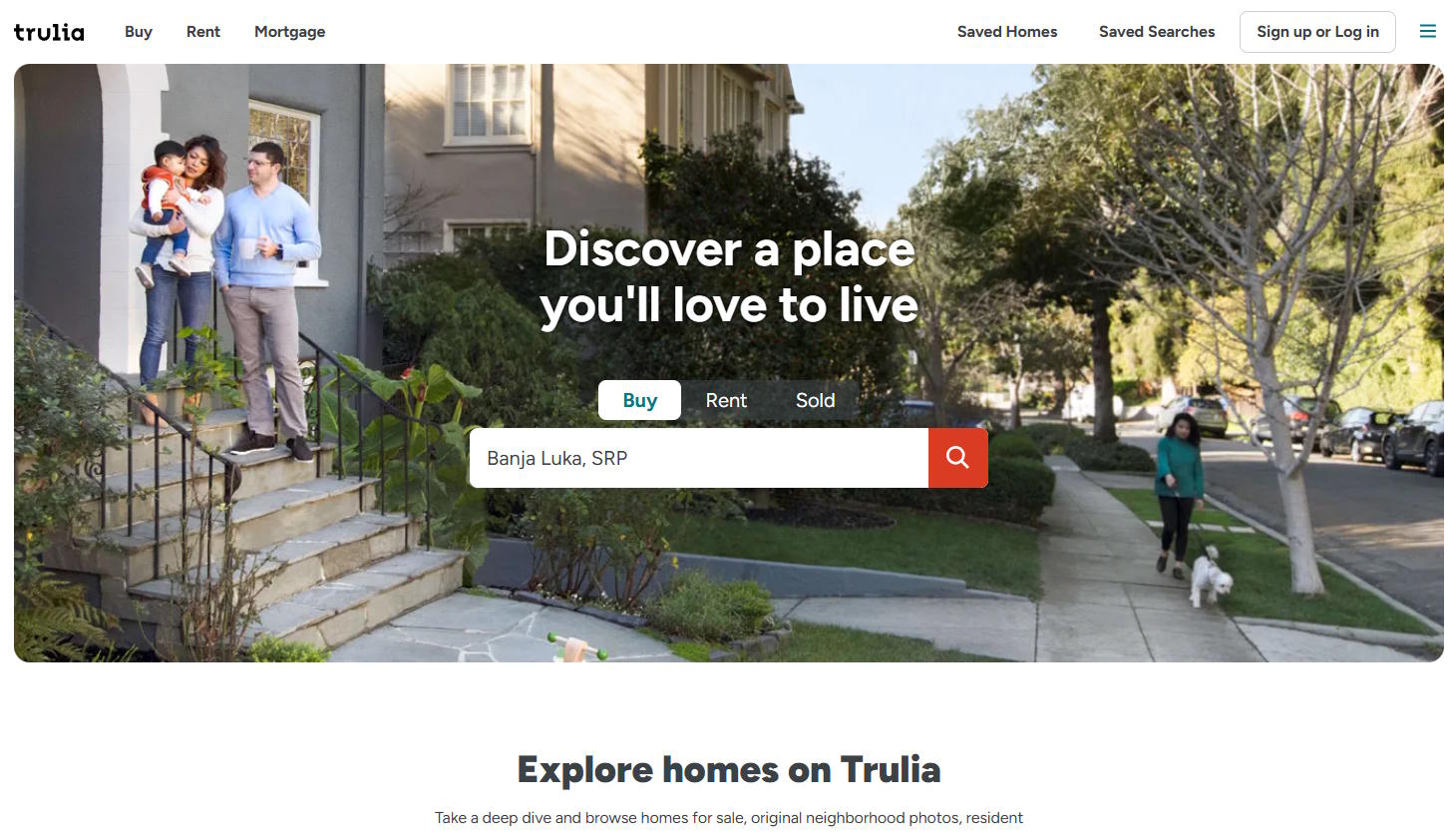
Trulia fills a distinct niche in real estate search: it excels at neighborhood intelligence rather than pure listing volume. The ‘What Locals Say’ feature aggregates qualitative feedback from actual residents about specific neighborhoods — noise levels, commute quality, safety perception, walkability, and community feel. Climate risk data (flood zone, wildfire risk, wind exposure) is displayed per property address, increasingly valuable as climate considerations reshape buying decisions.
The combination of school ratings, parent reviews, crime heat maps, and lifestyle filters (pet-friendly buildings, proximity to parks) makes Trulia the best tool for evaluating the neighborhood context around a property. Listings come from Zillow’s database (Trulia is a Zillow brand), so coverage is equivalent — the differentiation is entirely in the neighborhood intelligence layer.
Positive
- ✅ Best neighborhood intelligence — 'What Locals Say' qualitative data
- ✅ Climate risk data per property address
- ✅ Crime heat maps and safety perception data
- ✅ School ratings with parent reviews
- ✅ Lifestyle filters for neighborhood fit
- ✅ Rental and for-sale listings in one search
Negatives
- ✗ Listing data is Zillow-sourced — same freshness limitations
- ✗ Less useful as a standalone tool vs. complement to Realtor.com
- ✗ No Zestimate — limited valuation tools
Homes.com
#5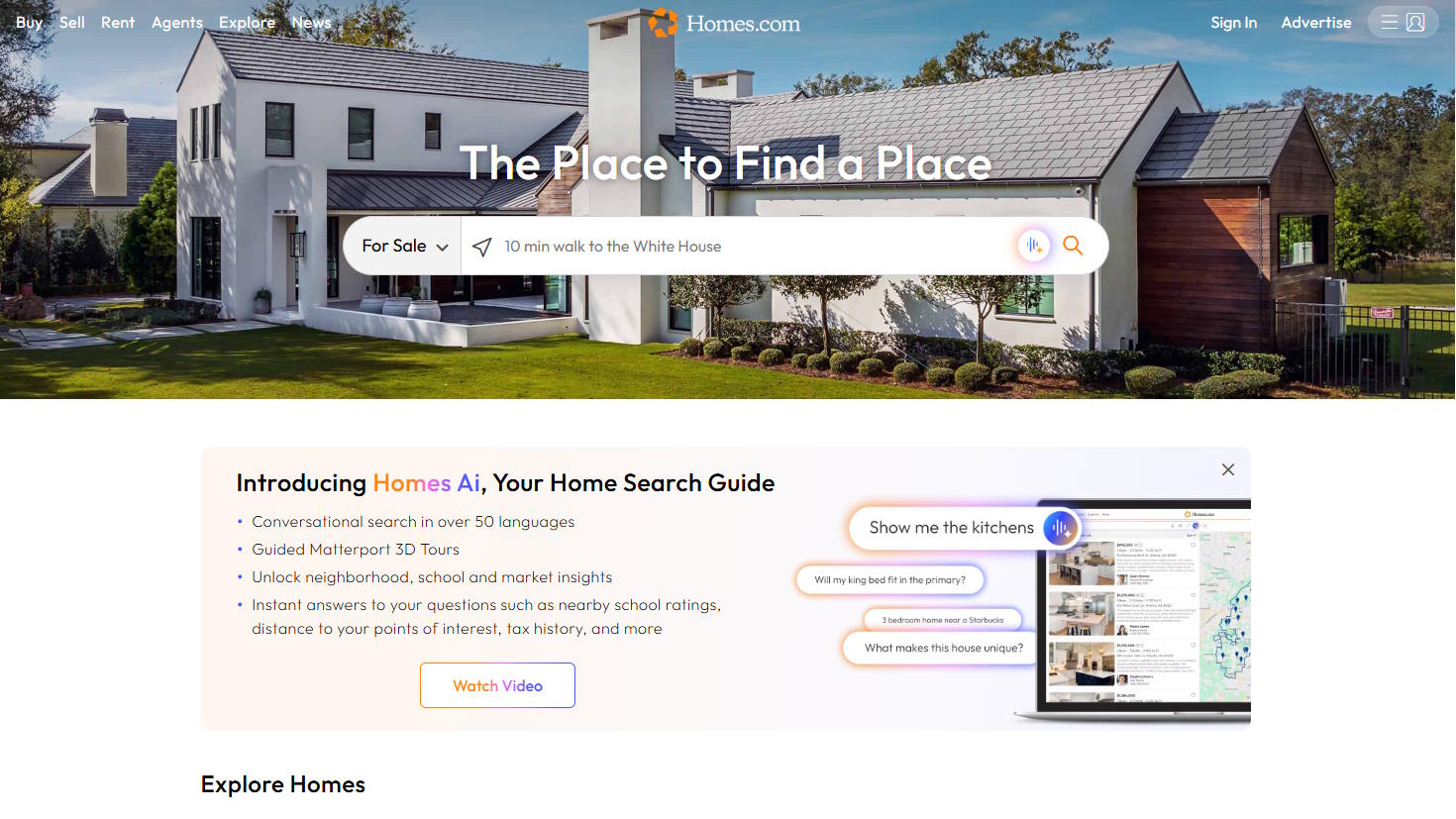
Homes.com rounds out our top 5 with solid basic functionality.
Positive
- ✅ Growing database — 50M+ listings
- ✅ Simple, fast search interface
- ✅ Agent matching and market insights
Negatives
- ✗ Limited advanced features
Our Testing Methodology
We tested each platform across 5 real estate markets (NYC, LA, Chicago, Austin, rural Vermont) with 40 property searches. Scored on listing freshness (30%), database coverage (25%), search and filter depth (20%), valuation tools (15%), and neighborhood data (10%). Listing status cross-checked against MLS direct sources.