DuckDuckGo leads our ranking with a score of 9.2/10.
- ✓ Zero tracking — no IP logging, no search history
- ✓ Anonymous AI Chat (GPT-4o mini, Claude) built-in
- ✓ 13,000+ Bangs for instant site redirects
- ✓ Privacy Grade ratings for every website visited
- ✓ Tracker blocker + smarter encryption by default
- ✓ Available as browser, mobile app, and extension
- ✓ Returns Google results via anonymous proxy
- ✓ No personal data sent to Google
- ✓ Built-in anonymous view for any web page
- ✓ Strict no-logging policy — independently audited
- ✓ Zero profiling or behavioral tracking
- ✓ EU-based with GDPR-compliant infrastructure
- ✓ 100% independent index — no Google/Bing data
- ✓ Goggles: customize your own ranking filters
- ✓ Zero user tracking or behavioral profiling
- ✓ Discussions tab surfaces Reddit/forum voices
- ✓ Summarizer AI for instant sourced answers
- ✓ Optional privacy-respecting ads only
- ✓ Open-source, self-hostable metasearch engine
- ✓ Aggregates results from 70+ sources
- ✓ No user accounts, no data retention
- ✓ Fully customizable search categories
- ✓ SearXNG fork actively maintained by community
- ✓ Available on dozens of public instances

- ✓ Fully independent crawler — no Google or Bing
- ✓ UK-based with strict EU/UK privacy compliance
- ✓ Zero third-party data sharing or profiling
- ✓ Growing index — now 6B+ pages crawled
- ✓ Transparent about ranking methodology
- ✓ No ads, no trackers, no algorithmic filter bubble
In-Depth Reviews
DuckDuckGo
#1 Pick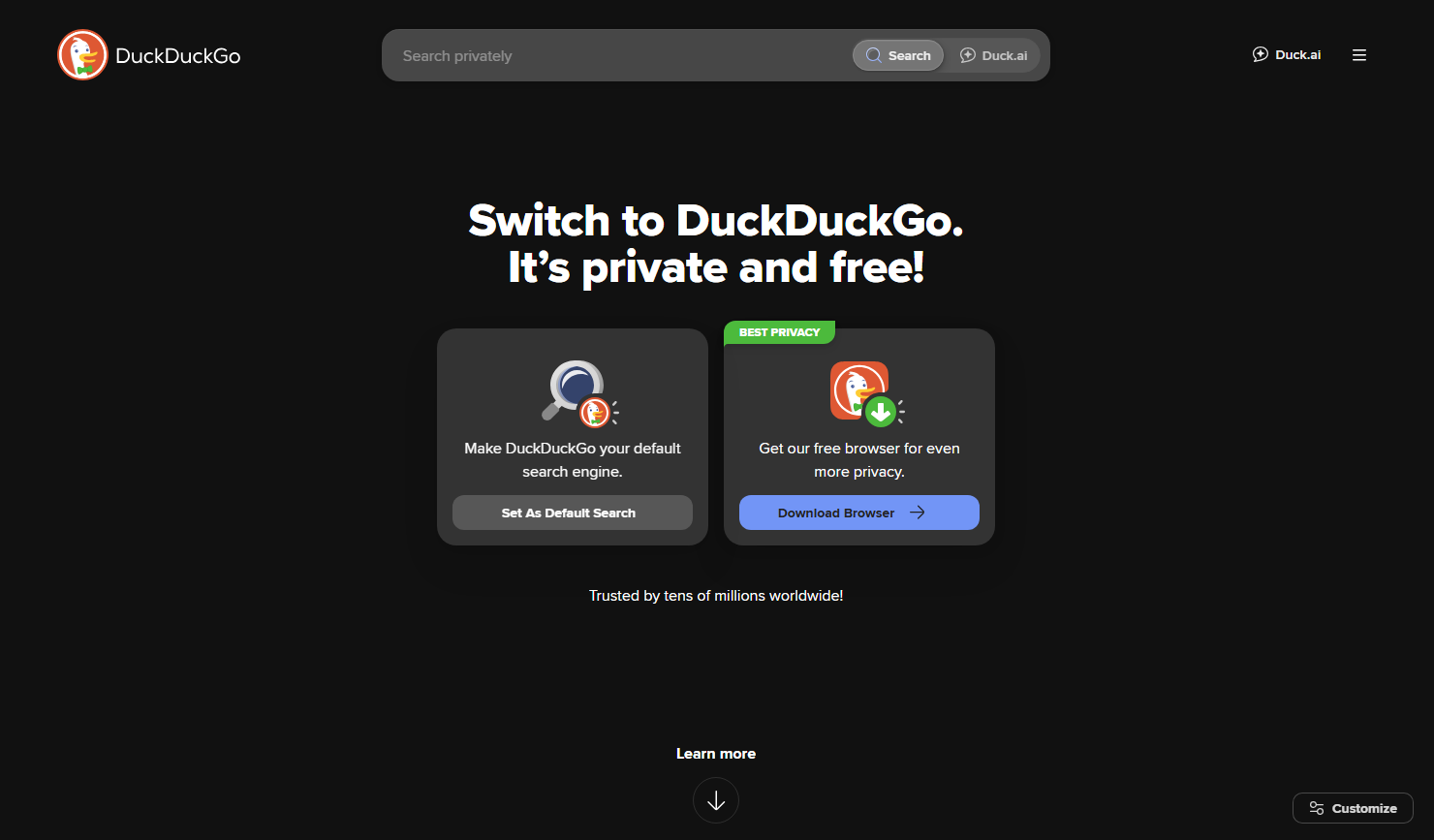
DuckDuckGo remains the most accessible entry point into private search. It requires zero setup, works in every browser, and delivers results that rival Bing for most everyday queries — all without storing a single byte of your search history. The Bangs feature alone makes it worth using: type !reddit, !amazon, or !yt before any query to jump directly to that site’s results, skipping search entirely.
The 2024–2026 era brought meaningful upgrades: anonymous AI Chat lets you query GPT-4o mini or Claude through DuckDuckGo’s servers so neither OpenAI nor Anthropic sees your IP or identity. Privacy Grades rate every website you visit. For most users making the switch from Google, DuckDuckGo is the frictionless first step — and often the last one they need.
Positive
- ✅ Zero tracking — completely stateless, no profile built
- ✅ Bangs make it the fastest way to search any site
- ✅ Anonymous AI Chat with GPT-4o mini and Claude
- ✅ Available as browser, extension, and mobile app
- ✅ Results quality matches Bing for most queries
- ✅ No setup required — works immediately
Negatives
- ✗ Local search noticeably weaker than Google
- ✗ No personalization — results don't improve over time
- ✗ Breaking news freshness lags behind Google
Startpage
#2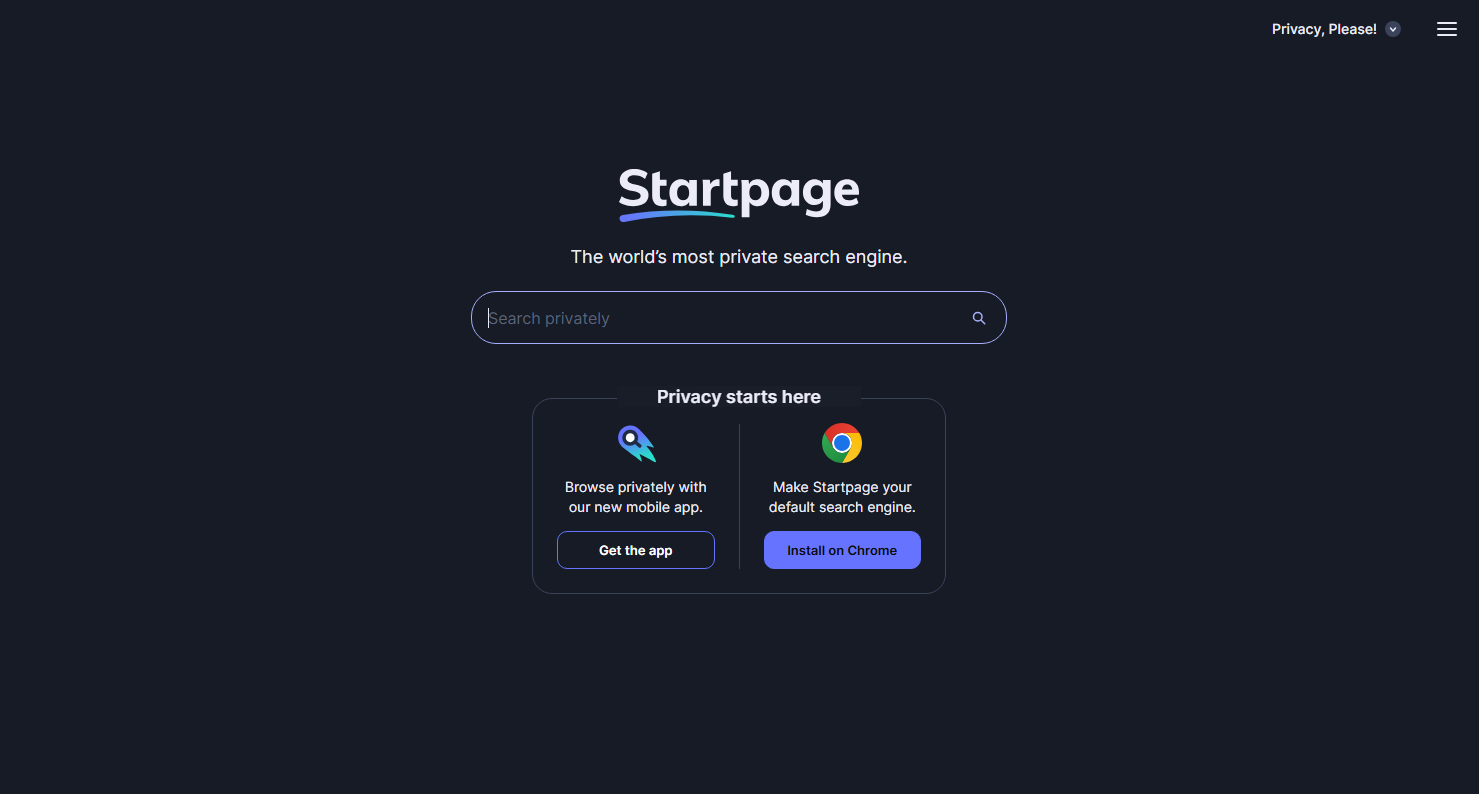
Startpage is the only search engine in the world that lets you get Google’s actual results — not a copy, not inspired-by, but real Google SERPs — without Google knowing you asked. It acts as an anonymous proxy, stripping your identity before sending queries and returning results on your behalf. The practical upshot: you get Google’s unbeatable index with zero behavioral profiling.
The Anonymous View feature extends this to web pages themselves. Click any result through Anonymous View and the destination site never sees your IP, browser fingerprint, or referrer. For users who want Google’s quality but refuse Google’s surveillance model, Startpage is the most elegant solution available.
Positive
- ✅ True Google results — largest index via anonymous proxy
- ✅ Anonymous View masks identity on destination pages too
- ✅ EU-based, independently audited, strict no-logging policy
- ✅ Clean interface — no cluttered widgets
- ✅ No account required, works instantly
- ✅ Strong GDPR compliance and transparency
Negatives
- ✗ You're still technically dependent on Google's index
- ✗ No Bangs or power-user shortcuts
- ✗ Anonymous View can slow page loads slightly
Brave Search
#3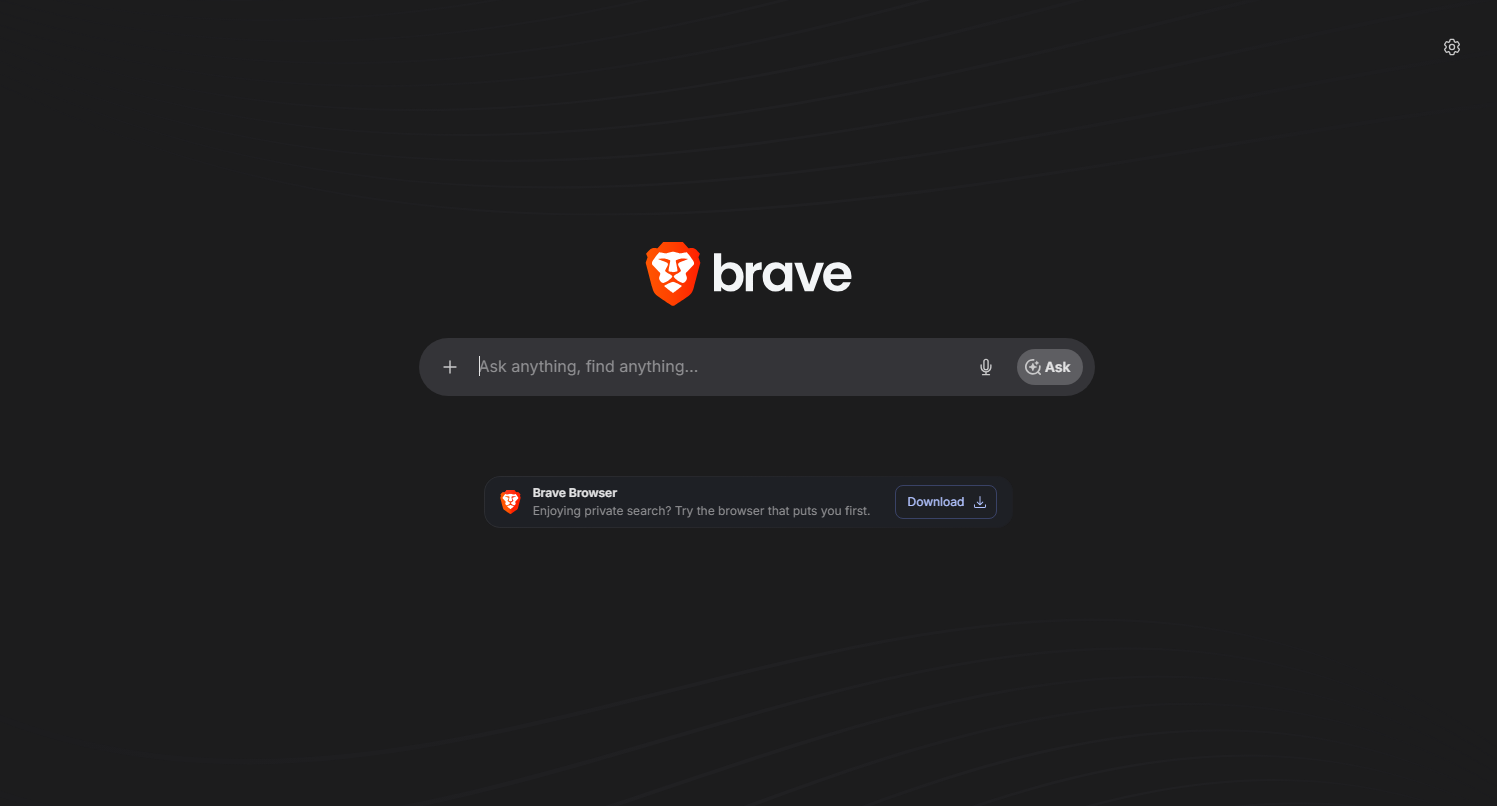
Brave Search rounds out our top 5 with solid basic functionality.
Positive
- ✅ 100% independent index — no Google/Bing data
- ✅ Goggles: customize your own ranking filters
- ✅ Zero user tracking or behavioral profiling
Negatives
- ✗ Limited advanced features
Searx
#4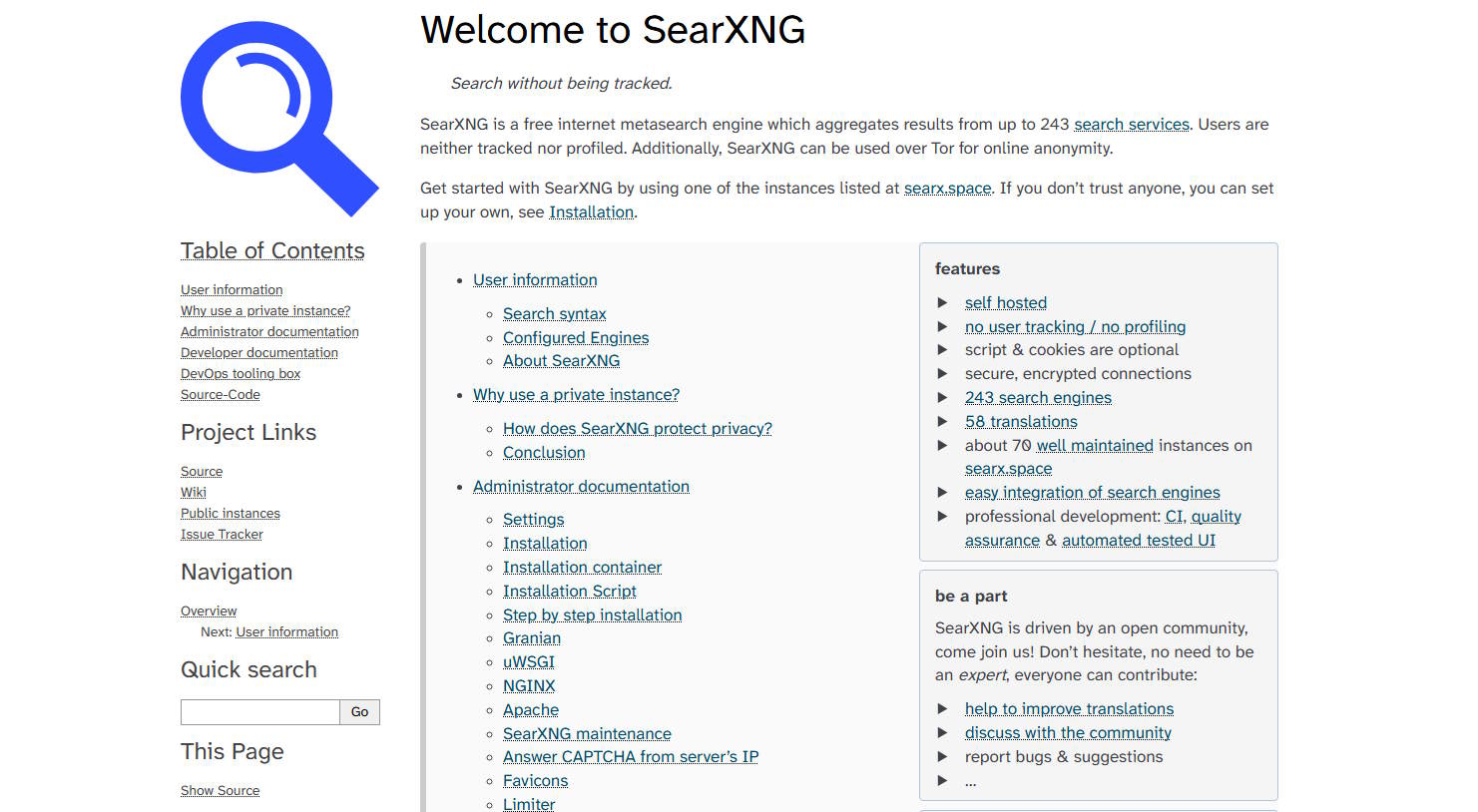
Searx (and its actively maintained fork SearXNG) is the most radical option in private search: a fully open-source metasearch engine you can self-host, inspect every line of code, and configure to pull results from 70+ sources simultaneously. There are no ads, no trackers, and no company with a business model that conflicts with your privacy. Public instances let anyone use it without running their own server.
The trade-off is polish. Out of the box, SearXNG feels like a developer tool rather than a consumer product. Configuration is powerful but requires comfort with settings pages. Result relevance varies by instance quality and enabled sources. For technically inclined users who want maximum transparency and control, Searx is unmatched — but it demands patience.
Positive
- ✅ Fully open-source — inspect and audit every line of code
- ✅ Self-hostable for maximum privacy control
- ✅ Aggregates 70+ search sources simultaneously
- ✅ Zero data retention at the engine level
- ✅ Completely free, no account required
- ✅ Actively maintained SearXNG fork with regular updates
Negatives
- ✗ Variable quality depending on public instance
- ✗ Interface less polished than consumer alternatives
- ✗ Self-hosting requires technical knowledge
Mojeek
#5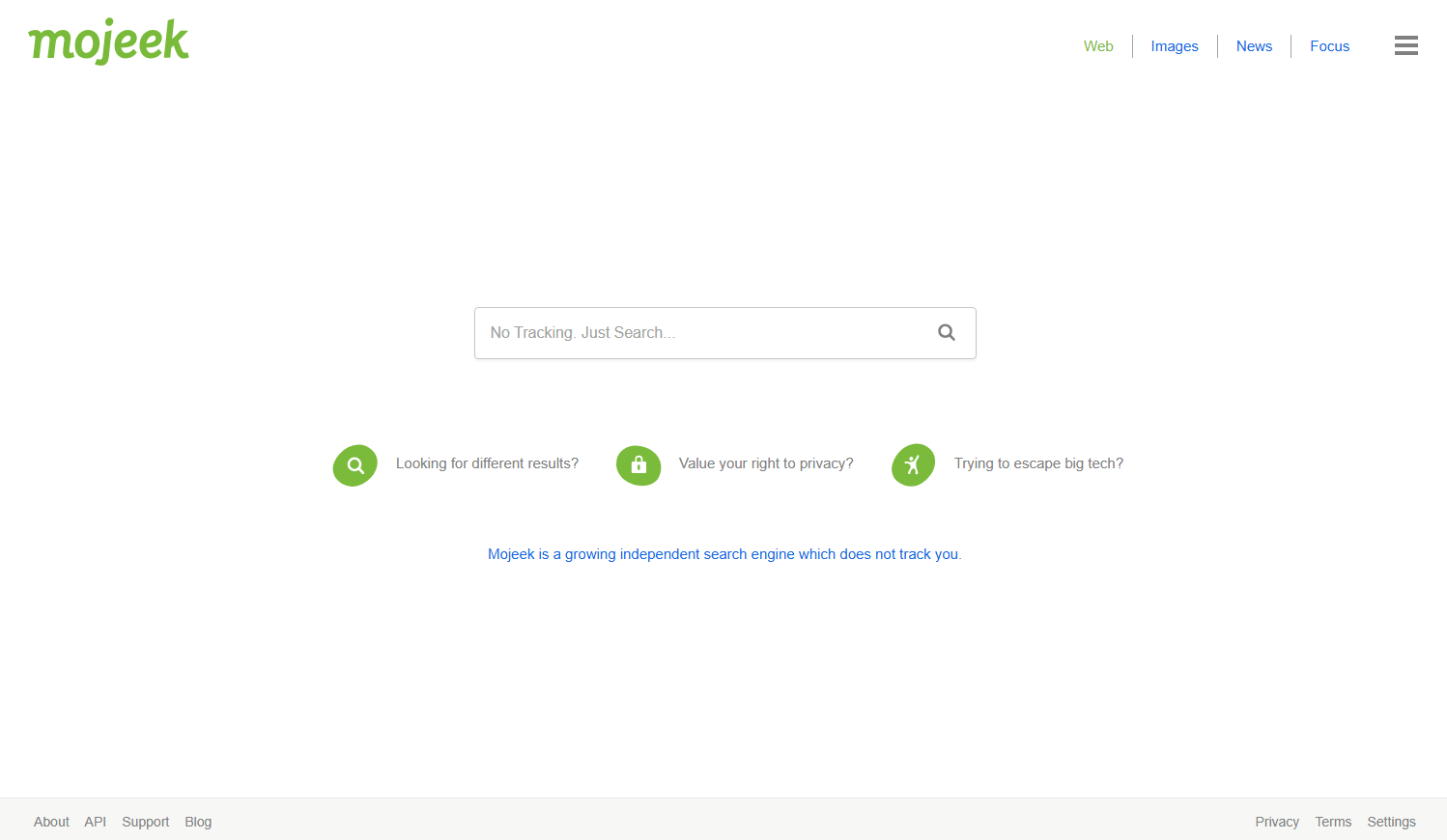
Mojeek stands out by doing something almost no other search engine does in 2026: it built its own index entirely from scratch, independent of Google, Bing, or any third party. With over 6 billion pages crawled by its own spiders, it’s a genuine alternative that doesn’t ultimately route data through the ad-tech giants. UK-based and GDPR-compliant, it has a clear, simple privacy policy and no behavioral advertising whatsoever.
Result quality is improving year over year but still trails the big players on obscure or highly specific queries. Mojeek shines on common informational searches and is remarkably fast. Think of it as the most ideologically consistent privacy engine — if you want results that have literally never touched Google or Bing infrastructure, Mojeek is your only realistic option.
Positive
- ✅ Truly independent index — zero dependency on Google or Bing
- ✅ UK-based, strong GDPR compliance and data sovereignty
- ✅ No behavioral advertising or user profiling
- ✅ Fast, clean interface with no clutter
- ✅ Transparent about its crawler and methodology
Negatives
- ✗ Smaller index — weaker on niche or obscure queries
- ✗ No AI features yet
- ✗ Local and news search behind competitors
Our Testing Methodology
We tested each engine with 150 queries across privacy (data exposure audits, third-party tracking checks), result quality (informational, navigational, local), speed, and transparency (privacy policy clarity, audit history). Weighted: privacy practices 35%, result relevance 30%, features 20%, UX 15%. We used network analysis tools to verify tracking claims. Re-tested quarterly.