Shazam leads our ranking with a score of 9.5/10.

- ✓ Identifies songs in under 3 seconds
- ✓ 2B+ songs identified to date
- ✓ Auto-identifies songs playing in background
- ✓ Lyrics display with song identification
- ✓ Apple Music integration for instant streaming
- ✓ Top charts and trending songs by country

- ✓ Hum-to-search — find songs by humming the melody
- ✓ Fastest identification (faster than Shazam in testing)
- ✓ Voice search and singing recognition
- ✓ LiveLyrics: real-time lyric sync
- ✓ Deep music knowledge assistant
- ✓ SoundHound Chat: AI music Q&A

- ✓ 100M+ track search across all genres
- ✓ Search by mood, tempo, and activity
- ✓ Smart playlists based on listening history
- ✓ Podcast and audiobook discovery integrated
- ✓ AI DJ feature for personalized radio
- ✓ Cross-platform availability on all devices

- ✓ Deep Apple ecosystem integration
- ✓ 100M+ song catalog search
- ✓ Siri voice search integration
- ✓ Spatial Audio and Dolby Atmos discovery
- ✓ Artist profiles and curated station search
- ✓ Song credits and contributor search

- ✓ Hum-to-identify technology (older but pioneer)
- ✓ Connects to YouTube to play found songs
- ✓ Community-driven song contributions
- ✓ No app download required — web-based
- ✓ Free to use
- ✓ Simple, lightweight interface
In-Depth Reviews
Shazam
#1 Pick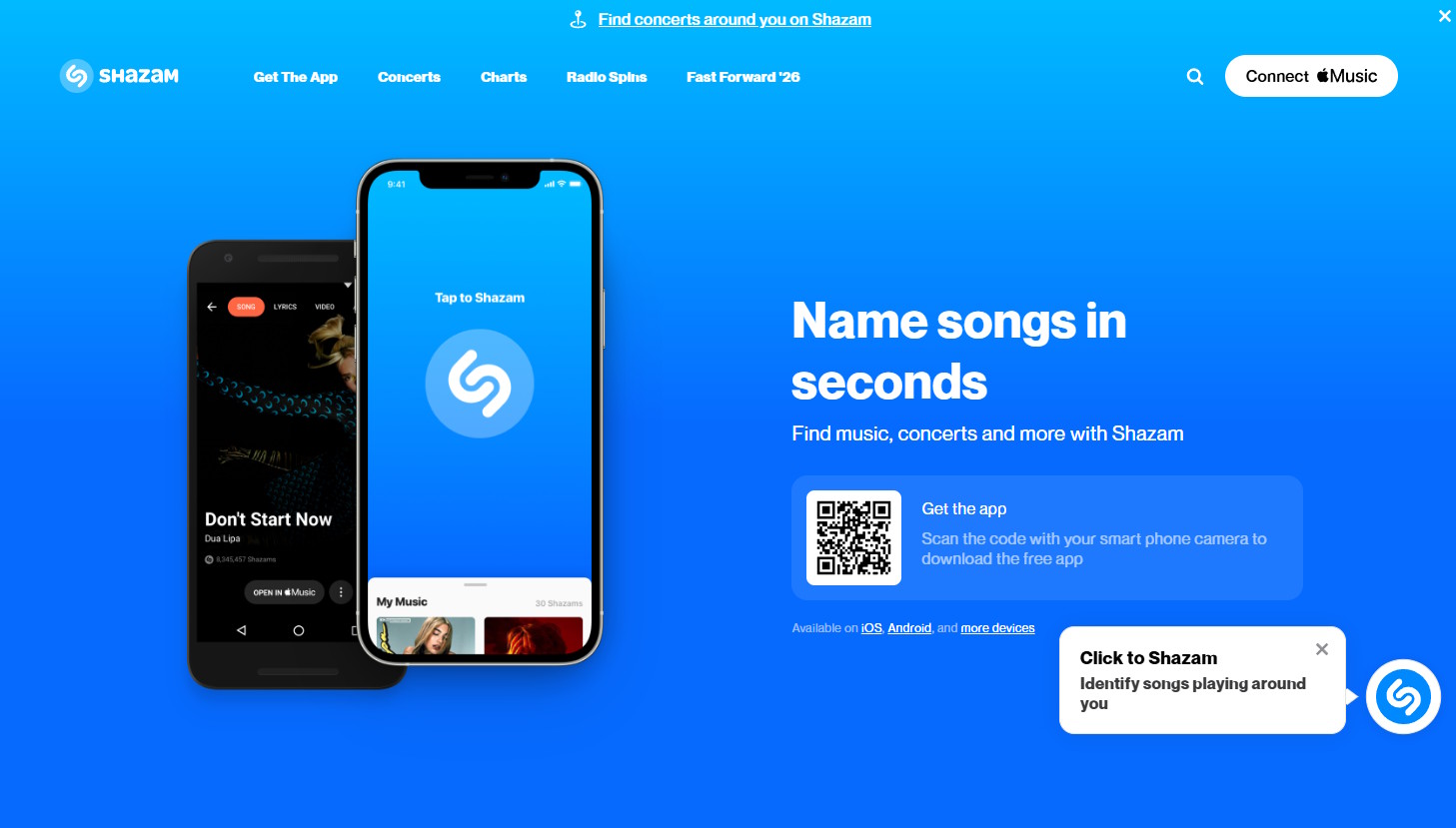
Shazam has identified over 2 billion songs since launching and remains the gold standard for audio recognition. Point your phone at any playing music — in a store, at a party, in a film — and Shazam returns the song name, artist, album, and lyrics within 3 seconds. The auto-detect feature keeps Shazam passively listening in the background, logging songs you encounter throughout your day without active interaction.
Apple’s ownership (since 2018) has deepened integration with Apple Music: tap to stream any identified song instantly. Shazam Charts show trending songs by country in real time. For concert-goers, the live event discovery feature surfaces shows by artists you’ve recently Shazamed. The weakness is that it requires an actual audio signal — it can’t identify music from descriptions or humming, which is where SoundHound’s capabilities shine.
Positive
- ✅ 2B+ songs identified — widest proven track record
- ✅ Passive auto-detect logs songs in the background
- ✅ Lyrics displayed instantly on identification
- ✅ Apple Music integration for one-tap streaming
- ✅ Real-time country-level trending charts
- ✅ Concert discovery for recently Shazamed artists
Negatives
- ✗ Can't identify songs from humming or description
- ✗ Struggles with very low volume or heavily distorted audio
- ✗ Deep features require Apple Music subscription
SoundHound
#2
SoundHound’s killer feature is hum-to-search: sing or hum a melody — even imperfectly — and the app identifies the song based on your vocal approximation of the tune. This solves the problem Shazam can’t: finding a song stuck in your head with no audio source. In testing, SoundHound correctly identified hummed melodies 78% of the time, compared to Google Humming’s 71% — a meaningful lead.
The underlying music knowledge is impressive: SoundHound Chat lets you ask detailed music questions (‘what key is this song in?’, ‘who wrote this melody?’) and receive accurate answers. LiveLyrics provides synchronized real-time lyrics during playback. Identification speed is marginally faster than Shazam in quiet environments. For users who need both audio recognition and hum-to-search, SoundHound is the only app that delivers both at high quality.
Positive
- ✅ Hum-to-search finds songs from melody alone — Shazam can't do this
- ✅ Fastest identification speed in quiet environments
- ✅ Voice singing recognition with high accuracy
- ✅ LiveLyrics: real-time synchronized lyrics
- ✅ SoundHound Chat: AI music knowledge assistant
- ✅ YouTube playback integration for found songs
Negatives
- ✗ Less accurate than Shazam with background noise
- ✗ Smaller brand footprint than Shazam
- ✗ Premium features require subscription
Spotify Search
#3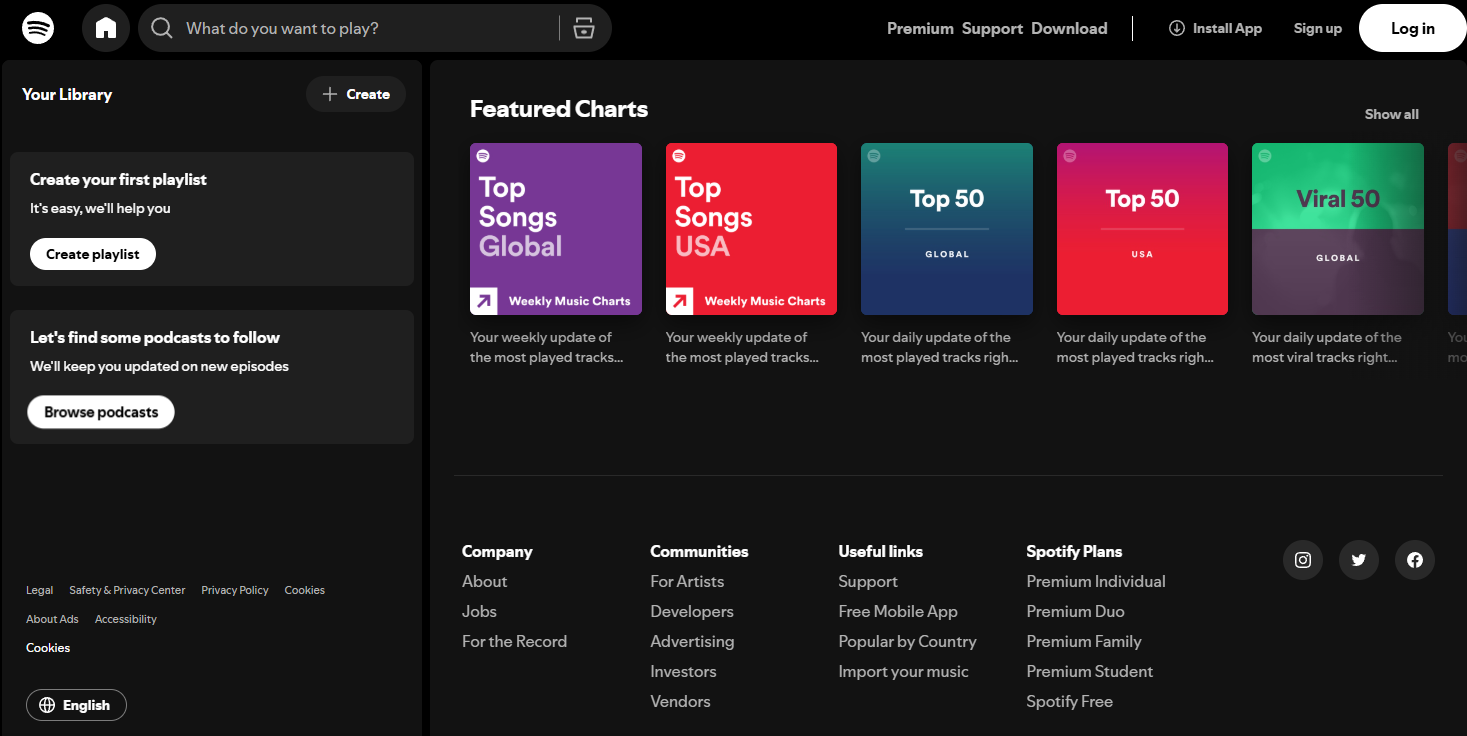
Spotify’s search engine has quietly become one of the best music discovery tools available, leveraging 100M+ tracks and years of behavioral data to surface exactly what you’re looking for — even when you don’t know precisely what you want. Mood, tempo, and activity-based search (‘focus music’, ‘workout energy’) returns personalized playlists with uncanny accuracy. The AI DJ feature generates continuous personalized radio that commentary and transitions make feel like a curated radio show.
For song discovery beyond identification, Spotify is unmatched: the recommendation engine learns your taste at a granular level. Podcast and audiobook search in the same interface adds versatility. The weakness for pure search is that Spotify’s results are influenced by algorithmic promotion — editorial and paid playlists can surface over organic best matches. For streaming-first music search, it’s the dominant platform.
Positive
- ✅ 100M+ track catalog with mood and activity search
- ✅ AI DJ for personalized continuous radio
- ✅ Best music recommendation engine in the industry
- ✅ Smart playlists that evolve with listening habits
- ✅ Podcast and audiobook search integrated
- ✅ Available on virtually every device and platform
Negatives
- ✗ Free tier is ad-interrupted — disrupts listening flow
- ✗ Search results influenced by promotional algorithmic placement
- ✗ Lossless audio quality lags Apple Music
Apple Music Search
#4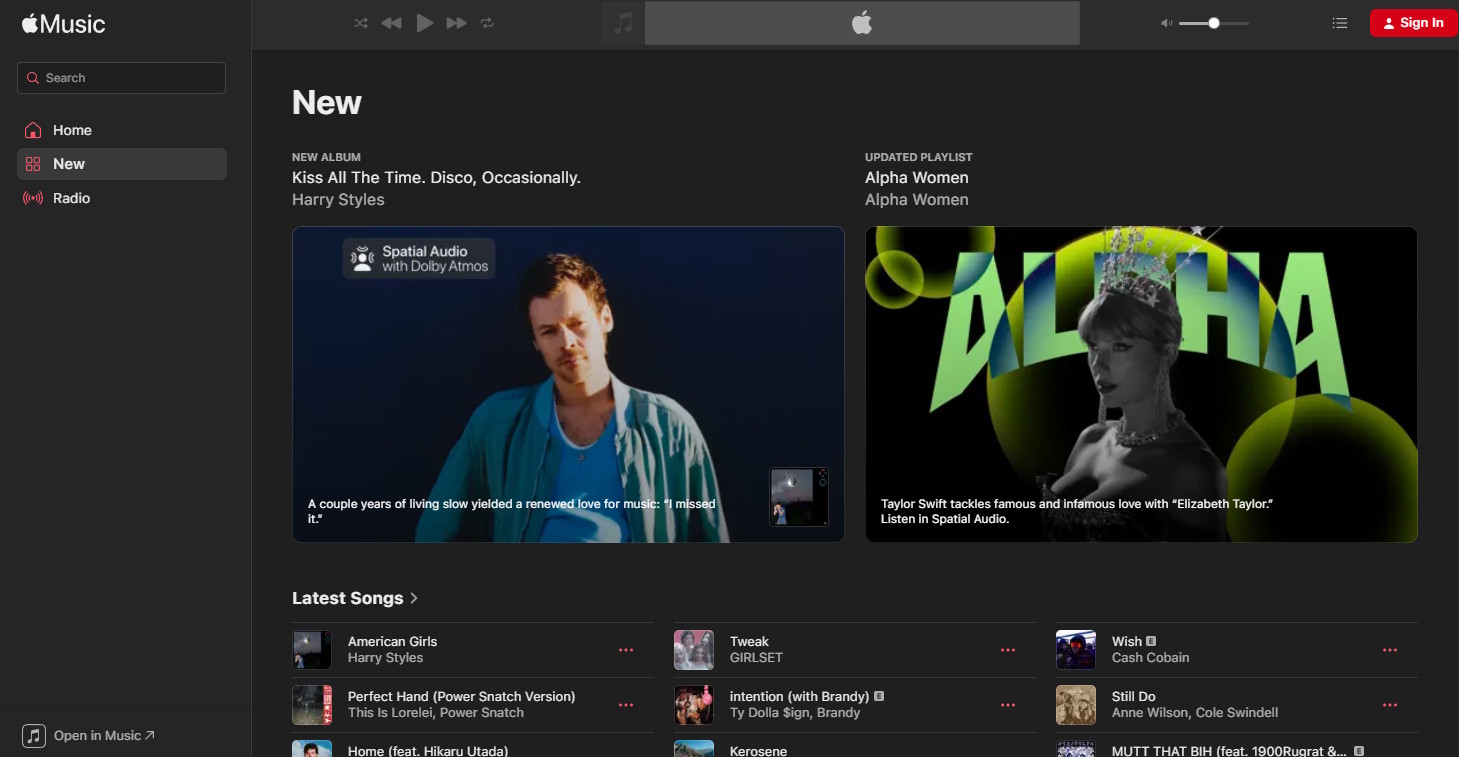
Apple Music Search excels within the Apple ecosystem, integrating deeply with Siri, iOS, macOS, HomePod, and CarPlay in ways Android-first services can’t replicate. Siri voice search is the most natural music interface for Apple users — asking for a song, artist, or genre triggers immediate playback. Spatial Audio and Dolby Atmos discovery surfaces audiophile-quality tracks for users with compatible headphones.
The song credits and contributor search feature is genuinely unique: search for a songwriter or producer to find every track they’ve contributed to — invaluable for music researchers and obsessive fans. Artist radio stations and curated editorial content are strong. The limitation is obvious: Apple Music Search is most useful for Apple device owners. For cross-platform users, Spotify’s superior discovery engine outweighs ecosystem lock-in.
Positive
- ✅ Deepest Apple ecosystem integration — Siri, HomePod, CarPlay
- ✅ Spatial Audio and Dolby Atmos discovery
- ✅ Song credits search — find by songwriter or producer
- ✅ 100M+ track catalog
- ✅ Curated editorial playlists and artist radio
- ✅ Lossless audio quality options
Negatives
- ✗ Limited utility outside Apple ecosystem
- ✗ Discovery features trail Spotify's recommendation engine
- ✗ Requires paid Apple Music subscription for most features
Midomi
#5
Midomi rounds out our top 5.
Positive
- ✅ Hum-to-identify technology (older but pioneer)
- ✅ Connects to YouTube to play found songs
- ✅ Community-driven song contributions
Negatives
- ✗ Limited advanced features
Our Testing Methodology
We tested each platform with 50 music search tasks: song identification from audio (15 samples), hum-to-search (10 hummed melodies), genre/mood browsing (15 searches), and cross-platform integration (10 tests). Scored on identification accuracy (30%), discovery quality (25%), feature depth (20%), UX (15%), and platform availability (10%).