Giphy leads our ranking with a score of 9.3/10.
- ✓ 10B+ GIFs — largest GIF library on the internet
- ✓ Trending GIFs updated in real time
- ✓ Stickers, clips, and emoji GIF formats
- ✓ Keyboard integration on iOS and Android
- ✓ Category and mood-based browsing
- ✓ GIF creation and upload tools
- ✓ Google-owned — powers GIFs in Google Messages
- ✓ Massive library with strong search relevance
- ✓ Native keyboard integration across Android
- ✓ Contextual GIF suggestions in messaging
- ✓ Popular and trending section updated hourly
- ✓ Clean API used by apps worldwide
- ✓ The definitive meme dictionary and encyclopedia
- ✓ Origin stories, spread history, and cultural context
- ✓ Template library for meme creation
- ✓ Community-contributed meme documentation
- ✓ Search by template, character, or phrase
- ✓ Trending meme tracking

- ✓ Community-driven image and meme hosting
- ✓ Search across millions of user-uploaded images
- ✓ Gallery format for meme collections
- ✓ Album and collection organization
- ✓ Voting system surfaces best community content
- ✓ Reddit community integration
- ✓ High-quality silent video clips (GIF alternative)
- ✓ Smooth looping video format
- ✓ Reaction clip library
- ✓ Used by gaming communities
- ✓ WebM and MP4 format support
- ✓ Free hosting platform
In-Depth Reviews
Giphy
#1 Pick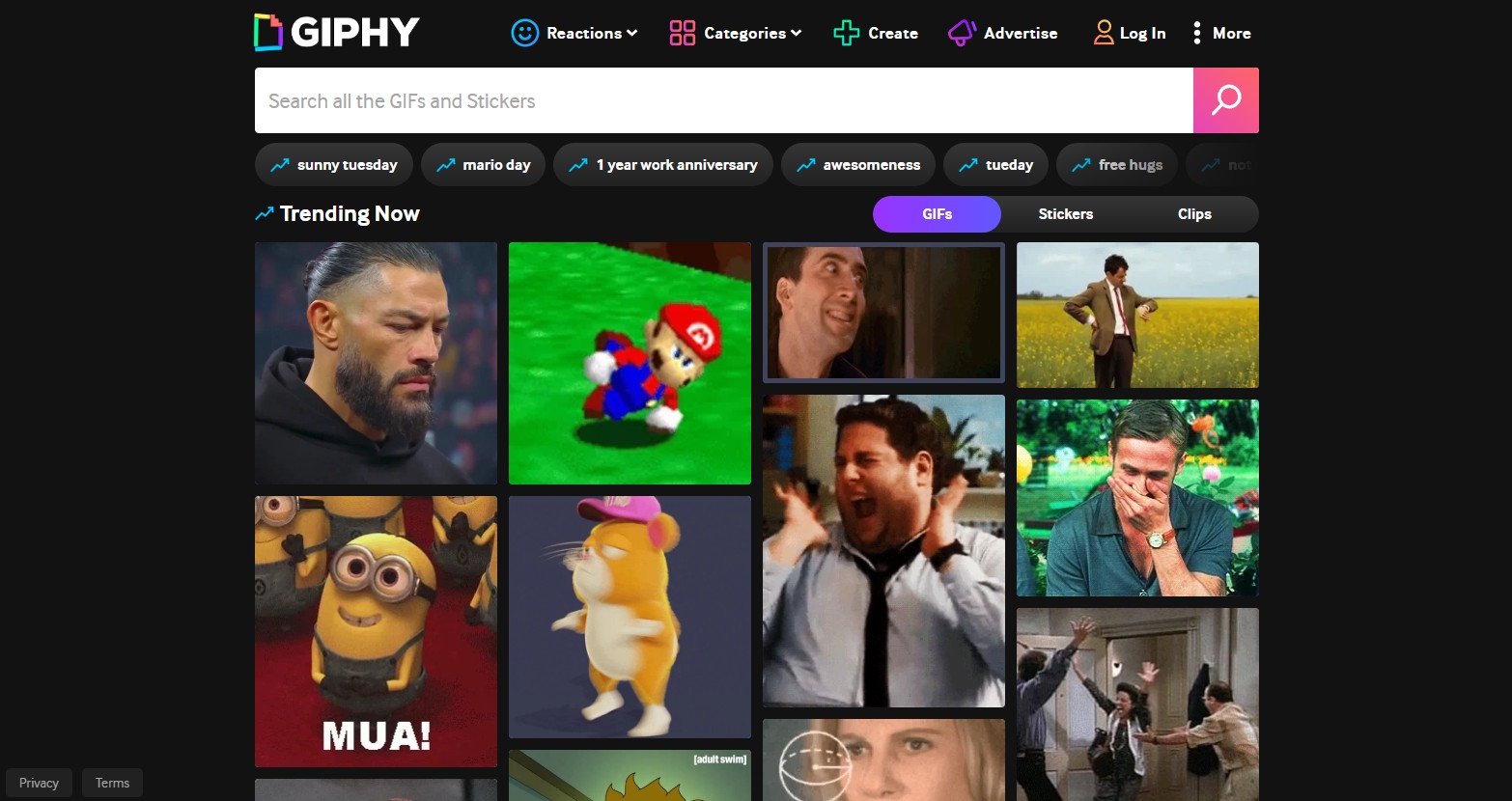
Giphy is the GIF search engine the internet built its culture on. With 10 billion+ GIFs, stickers, and clips, and a search algorithm refined over a decade of reaction culture, it consistently returns the most relevant expression for any emotion, moment, or reference. Integration with iMessage, Slack, Twitter, Instagram, WhatsApp, and dozens of other platforms means Giphy GIFs are the shared visual language of digital communication.
The trending section is a real-time pulse on internet culture — new memes appear on Giphy within hours of going viral. Category and mood browsing helps users discover GIFs outside their usual vocabulary. The GIF creation tools let creators upload and distribute original content. For pure GIF discovery and cultural fluency, Giphy is the default reference point that no competitor has dislodged.
Positive
- ✅ 10B+ GIFs — the largest library and widest cultural coverage
- ✅ Best search relevance for emotion and reaction queries
- ✅ Native keyboard integration on iOS and Android
- ✅ Embedded in Slack, iMessage, Instagram, and more
- ✅ Real-time trending — new viral content appears within hours
- ✅ GIF creation and upload tools for creators
Negatives
- ✗ Corporate partnerships can dominate trending sections
- ✗ Privacy: usage data shared with partner platforms
- ✗ Some branded GIFs can feel intrusive
Tenor
#2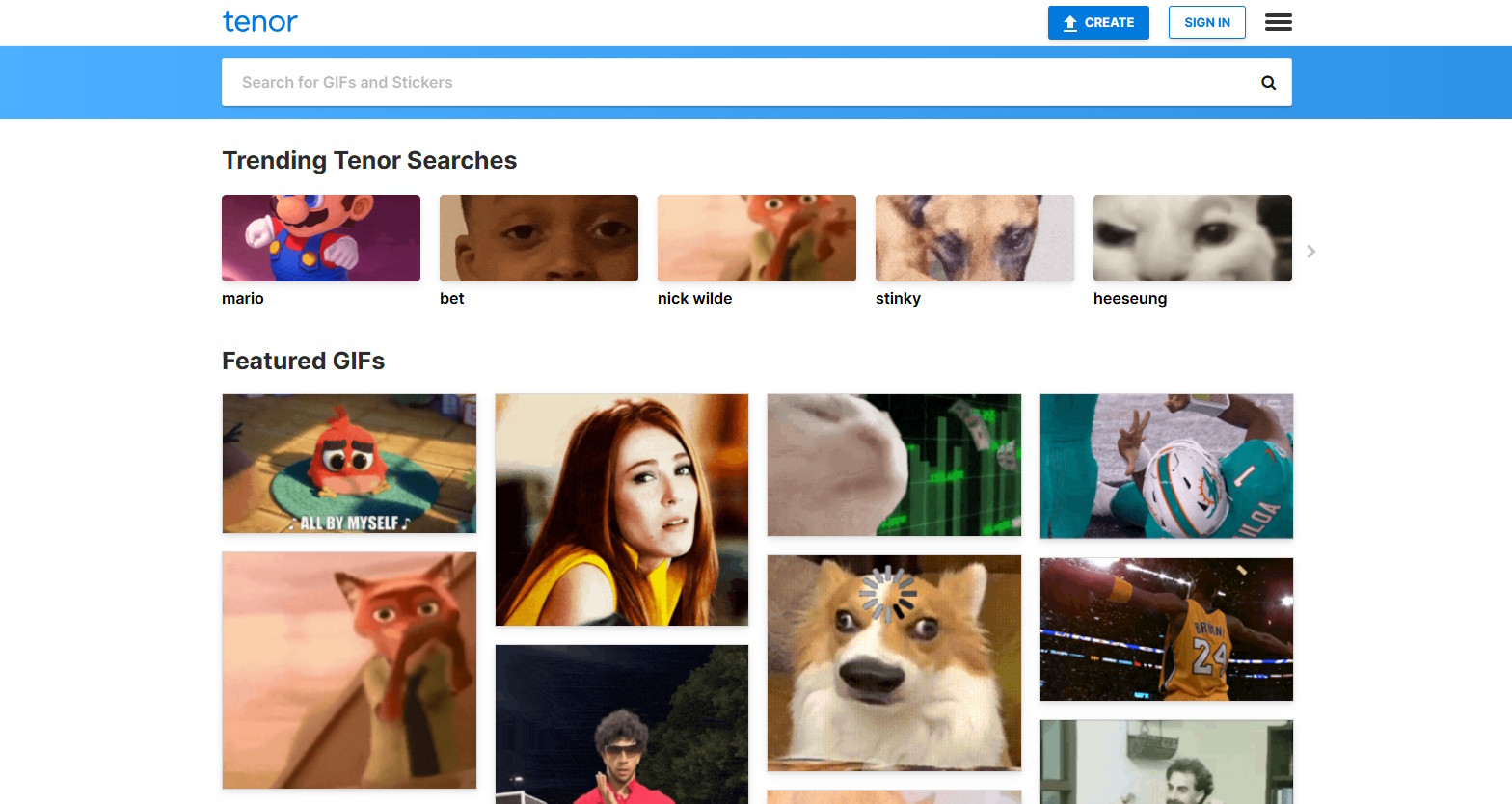
Tenor is Google’s answer to Giphy, acquired in 2018 and now the default GIF engine in Google Messages, Google Search, and across Android. Its search relevance benefits from Google’s natural language processing — contextual understanding of queries means searching ‘that feeling when’ or ‘absolutely not’ returns precisely matching reactions. The integration across Android’s native keyboard makes it the most seamless GIF experience for Android users.
The API powers GIF search in thousands of third-party apps, giving Tenor significant reach even where users don’t know its name. Content moderation is stronger than Giphy, which makes it the preferred choice for family-friendly platforms and enterprise communication tools. The GIF library, while slightly smaller than Giphy’s, covers all mainstream reaction categories with strong relevance.
Positive
- ✅ Google-owned — best contextual search via NLP
- ✅ Native Android keyboard and Google Messages integration
- ✅ Strong API with thousands of third-party app integrations
- ✅ Better content moderation than Giphy
- ✅ Updated trending section from Google's real-time signals
- ✅ Clean, fast interface
Negatives
- ✗ Smaller library than Giphy
- ✗ Less cultural cachet among meme-savvy users
- ✗ Less useful for niche internet culture references
Know Your Meme
#3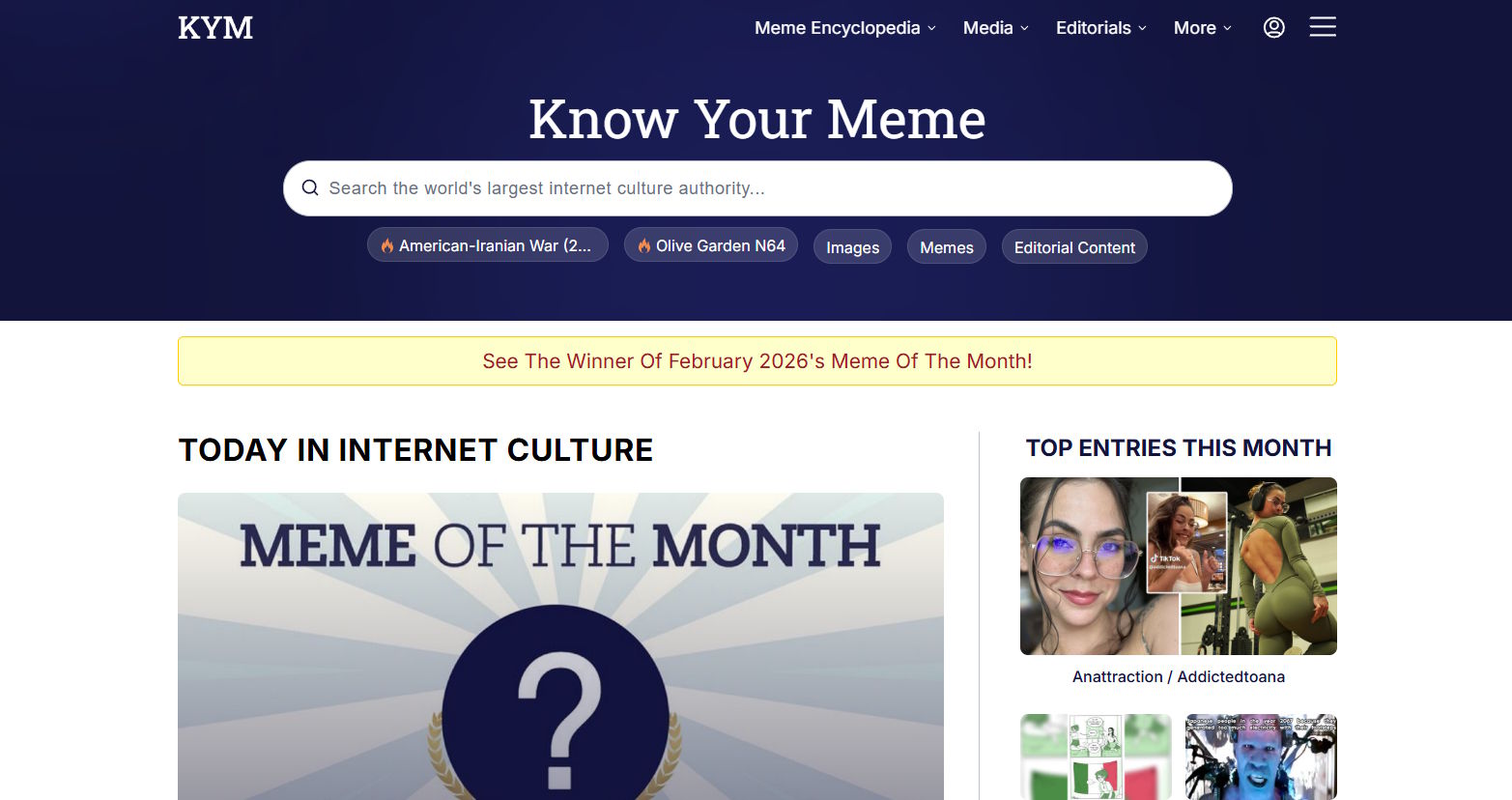
Know Your Meme is the Library of Congress of internet humor — a meticulously documented encyclopedia of memes, their origins, evolution, and cultural impact. Every major internet meme has a dedicated page with the original source, spread history, notable variations, and community analysis. For anyone who wants to understand where a meme came from, what it means, and how it evolved, Know Your Meme is the authoritative reference.
The template library enables meme creation with documented, correctly formatted templates. Trending meme tracking surfaces what’s currently spreading. The community-contributed documentation reflects collective internet scholarship. Know Your Meme is less a search tool for finding GIFs to send and more an intellectual tool for understanding digital culture — the difference between using a meme and knowing why it works.
Positive
- ✅ Definitive encyclopedia of internet meme culture
- ✅ Origin stories and spread history for every major meme
- ✅ Correctly formatted template library for creation
- ✅ Trending meme tracker reflects current internet culture
- ✅ Community documentation with citations and sources
- ✅ Searchable by template, character, phrase, or origin
Negatives
- ✗ Not a GIF search tool — documentation, not delivery
- ✗ Requires prior knowledge of a meme to research it
- ✗ Interface is encyclopedic rather than fun

Imgur Search
#4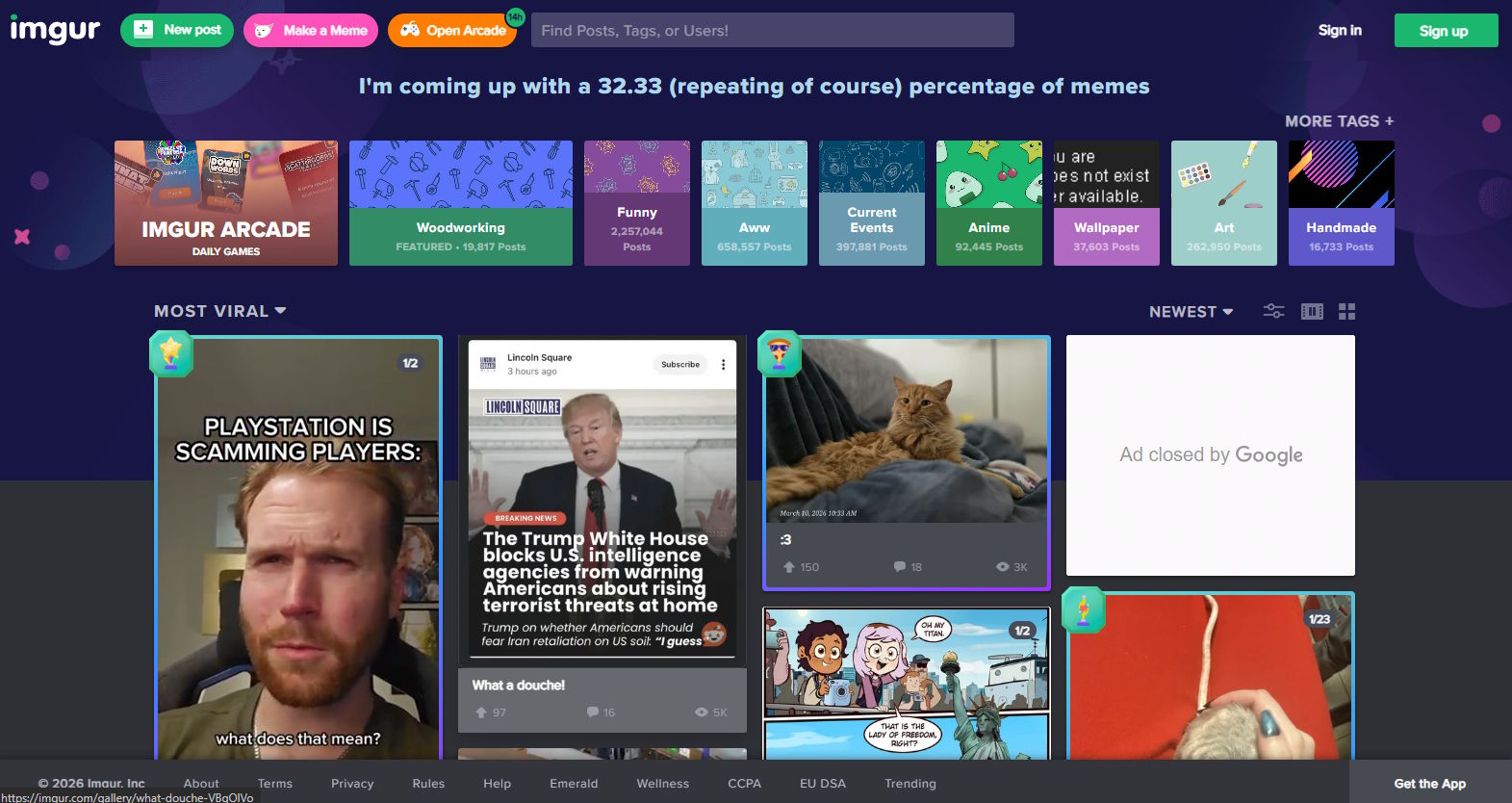
Imgur occupies a unique position as the internet’s community image board and GIF repository — more chaotic than Giphy, less encyclopedia-like than Know Your Meme, but deeply connected to Reddit and grassroots meme culture. When a meme first originates on Reddit or a niche forum, it likely passes through Imgur before reaching mainstream platforms. The voting system surfaces the best content; albums and galleries organize themed collections.
For meme researchers and internet culture historians, Imgur’s archive preserves the raw, unfiltered spread of visual humor in ways commercial platforms don’t. The search quality for specific memes is less precise than Giphy, but the community depth and authentic origins of content make it essential for anyone who wants to understand meme culture rather than just consume it.
Positive
- ✅ Deep meme community connected to Reddit culture
- ✅ Early-stage meme discovery before mainstream spread
- ✅ Gallery format for curated meme collections
- ✅ Voting system surfaces community-validated content
- ✅ Large archive of internet culture history
- ✅ Free hosting for image and GIF content
Negatives
- ✗ Less precise search than Giphy or Tenor
- ✗ Content quality varies widely
- ✗ Interface can feel disorganized
Gfycat
#5Gfycat rounds out our top 5.
Positive
- ✅ High-quality silent video clips (GIF alternative)
- ✅ Smooth looping video format
- ✅ Reaction clip library
Negatives
- ✗ Limited advanced features
Our Testing Methodology
We tested each platform with 40 GIF and meme search queries across categories: reaction emotions, current events, gaming, pop culture references, and meme template research. Scored on search relevance (35%), library size (25%), platform integration (20%), content moderation (10%), and cultural depth (10%). Tested both desktop and mobile keyboard integrations.