OpenSea leads our ranking with a score of 8.5/10.

- ✓ 10,000+ cryptocurrencies tracked
- ✓ Real-time price, volume, and market cap
- ✓ Portfolio tracking and alerts
- ✓ Exchange comparison and liquidity data
- ✓ DeFi protocols and yield tracking
- ✓ Free and comprehensive — no subscription
- ✓ Most widely used crypto price tracker
- ✓ 20,000+ coins and tokens listed
- ✓ Fear & Greed Index and market sentiment
- ✓ Exchange volume and dominance data
- ✓ Historical data and calendar events
- ✓ Portfolio management tools
- ✓ 80M+ NFTs listed across multiple blockchains
- ✓ Collection and creator search
- ✓ Rarity score and trait filtering
- ✓ Price history charts for every NFT
- ✓ Trending collections and volume rankings
- ✓ Wallet connection for seamless trading
- ✓ dApp usage analytics and rankings
- ✓ NFT collection tracking and analytics
- ✓ DeFi protocol TVL and yield data
- ✓ Multi-chain coverage: Ethereum, BSC, Solana
- ✓ Blockchain gaming analytics
- ✓ Token portfolio tracking

- ✓ Creator-owned royalty model
- ✓ Multi-chain: Ethereum, Tezos, Polygon
- ✓ Creator tools: mint, list, auction
- ✓ Community governance token (RARI)
- ✓ Open-source smart contract infrastructure
- ✓ Launchpad for new collections
In-Depth Reviews
CoinGecko
#1 Pick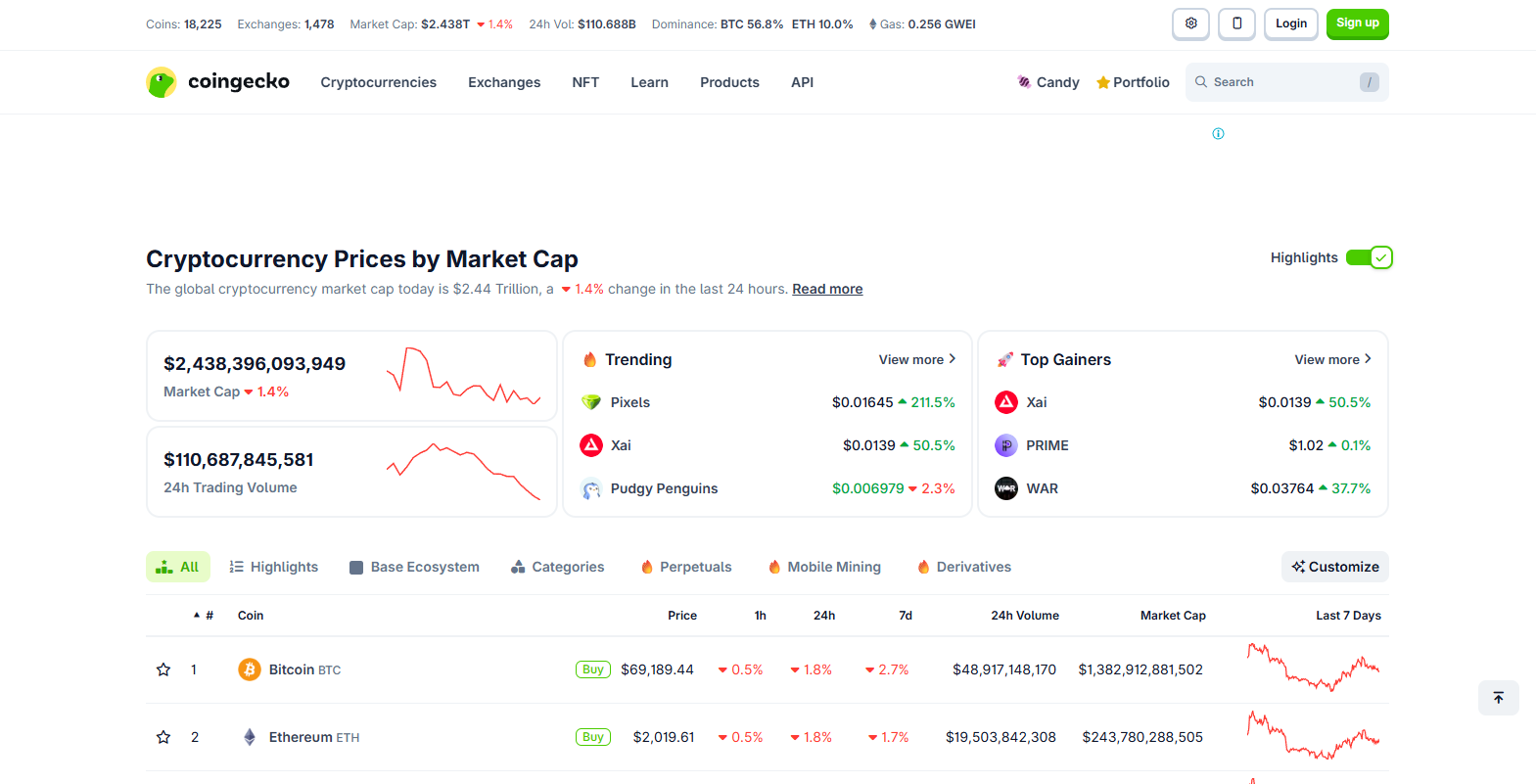
CoinGecko is the most comprehensive and independent cryptocurrency data platform, tracking 10,000+ coins and tokens with real-time price, volume, market cap, and exchange data. Unlike CoinMarketCap (owned by Binance), CoinGecko is independently operated, which is a meaningful distinction in a space where conflicts of interest abound. DeFi protocol tracking shows total value locked (TVL) and yield rates across hundreds of protocols.
The portfolio tracking and price alert features serve both casual holders and active traders. Exchange comparison shows which platforms offer the best liquidity for specific tokens. Historical data going back to each token’s launch provides context that newer investors often overlook. For anyone making investment decisions in crypto — from entry-level to advanced — CoinGecko’s combination of independence and comprehensiveness makes it the data foundation of choice.
Positive
- ✅ 10,000+ coins tracked — most comprehensive coverage
- ✅ Independent operation — no Binance conflict of interest
- ✅ DeFi protocol TVL and yield data
- ✅ Exchange comparison and liquidity data
- ✅ Portfolio tracking and price alerts
- ✅ Free and fully featured — no subscription required
Negatives
- ✗ Less polished UI than CoinMarketCap
- ✗ Some data feeds can lag during high volatility
- ✗ Advanced features require API key for bulk access
CoinMarketCap
#2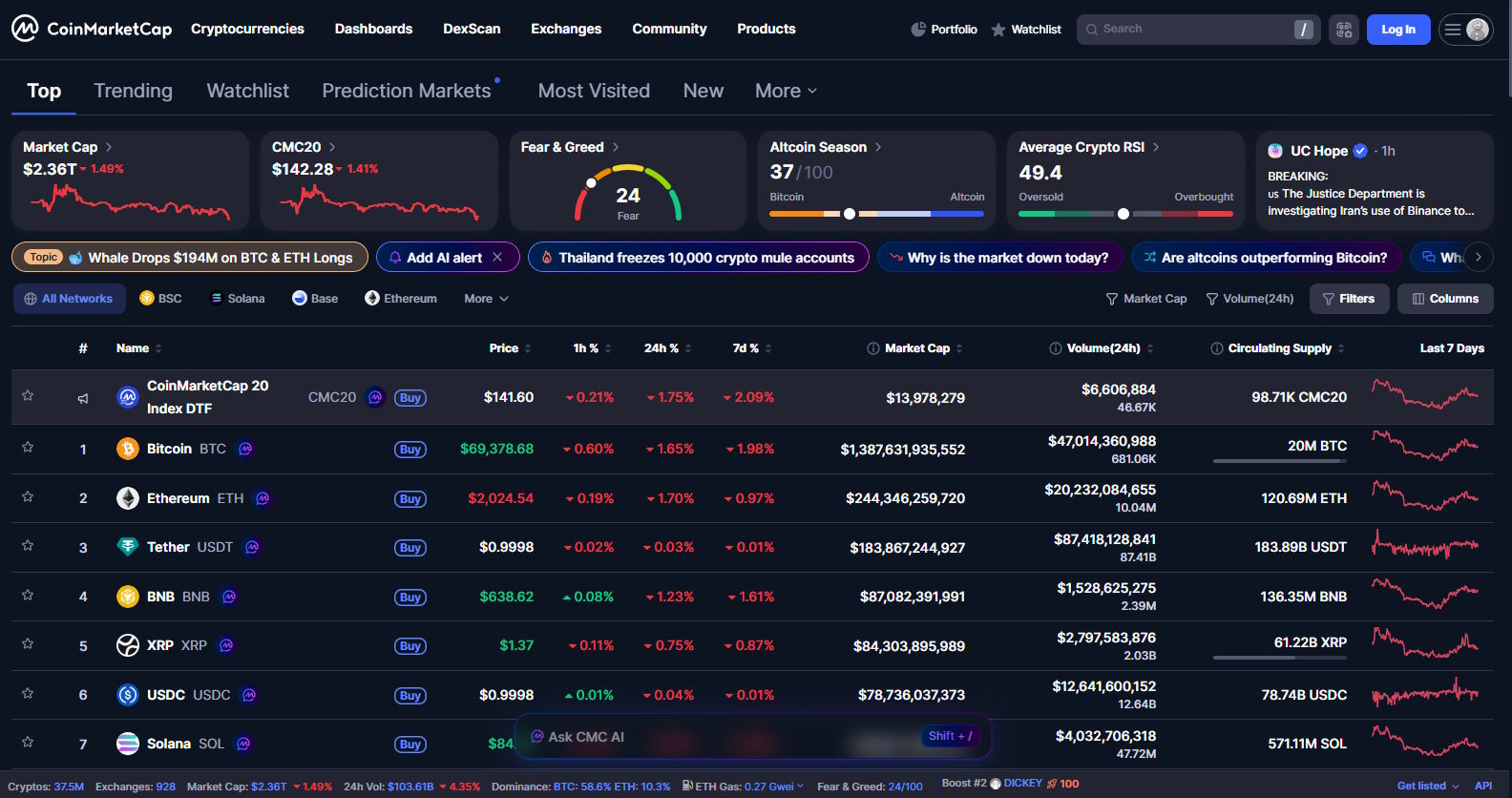
CoinMarketCap is the most recognized brand in crypto data and the first stop for millions of retail investors checking prices. With 20,000+ listed coins and tokens, the Fear & Greed Index, exchange volume rankings, and market dominance charts, it provides the market overview dashboard that has defined how crypto data is presented since 2013. Binance’s acquisition in 2020 added resources but also raised independence concerns that some investors factor in.
The economic calendar tracks upcoming blockchain events, project launches, and regulatory decisions that can move prices. Portfolio management tools are integrated. For retail investors who want a familiar, comprehensive, and widely cited market overview, CoinMarketCap’s brand authority and data breadth make it the default reference point — the S&P 500 ticker equivalent for digital assets.
Positive
- ✅ Most recognized crypto data brand — widely cited by media
- ✅ 20,000+ coins and tokens listed
- ✅ Fear & Greed Index and market sentiment gauge
- ✅ Economic calendar for market-moving events
- ✅ Exchange volume and dominance data
- ✅ Portfolio management tools built in
Negatives
- ✗ Binance-owned — independence concerns for critical analysis
- ✗ Listing standards have been questioned
- ✗ Ad-heavy interface on free tier
OpenSea
#3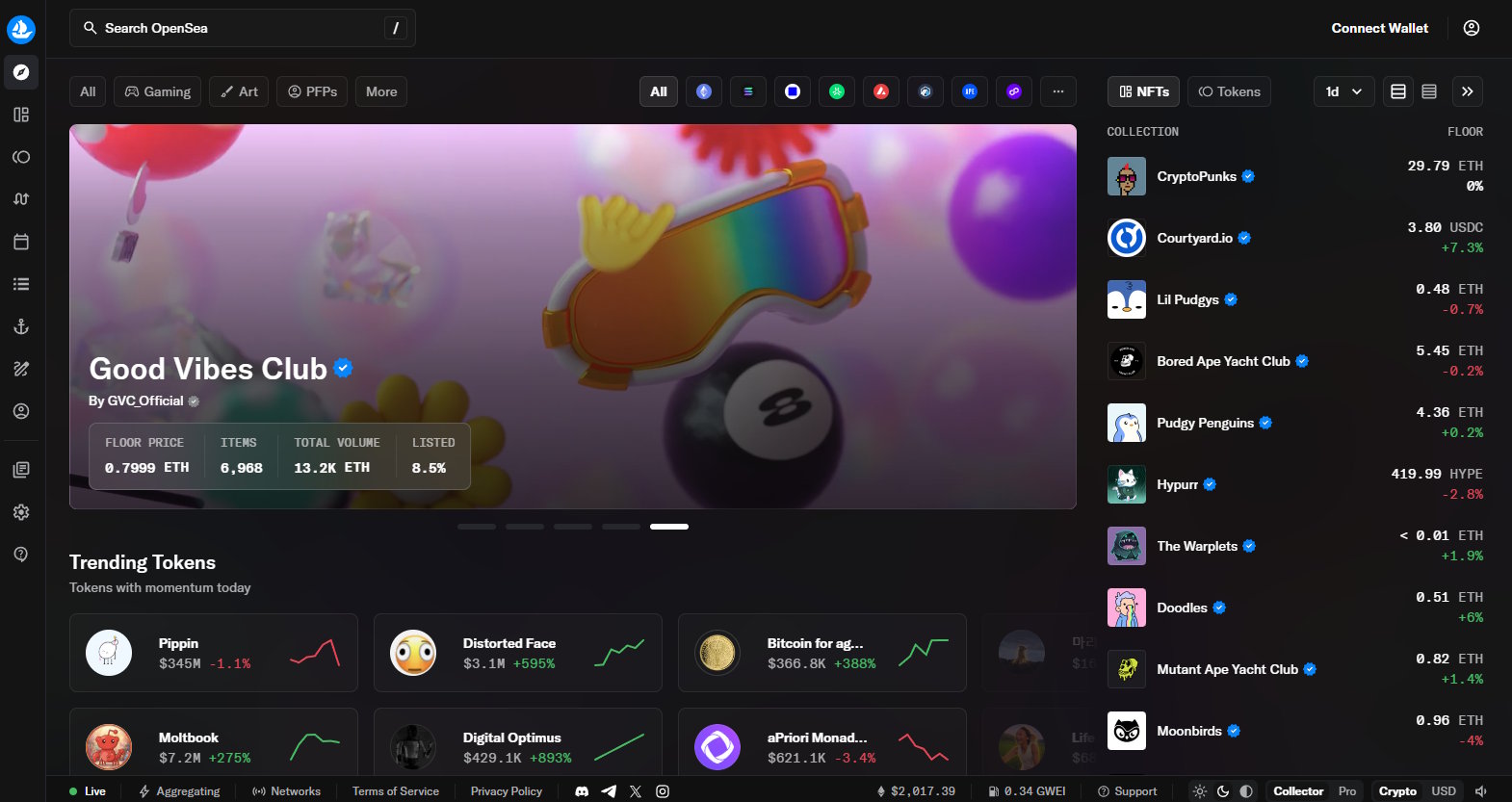
OpenSea remains the dominant NFT marketplace and search engine, with 80M+ NFTs indexed across Ethereum, Polygon, Solana, and other chains. The collection search, rarity filtering, and trait-based discovery make it the most complete NFT research tool available. Price history charts for individual NFTs and entire collections provide context for evaluating fair value in a market notorious for volatility.
Trending collections and volume rankings surface where market activity is concentrating. Wallet connection enables seamless transition from research to transaction. The rarity score and trait filtering — showing what percentage of a collection has a specific attribute — is essential for evaluating scarcity in PFP collections. Despite competitive pressure from Blur and others, OpenSea’s search depth and multi-chain coverage keep it the reference point for NFT discovery.
Positive
- ✅ 80M+ NFTs across multiple blockchains — widest coverage
- ✅ Rarity score and trait filtering for collection analysis
- ✅ Price history charts at collection and individual NFT level
- ✅ Trending collections and real-time volume rankings
- ✅ Multi-chain: Ethereum, Polygon, Solana, and more
- ✅ Wallet connection for seamless research-to-trade workflow
Negatives
- ✗ Market share declining vs. Blur for professional traders
- ✗ Royalty enforcement changes have upset creator community
- ✗ Interface can be slow during high-volume periods
DappRadar
#4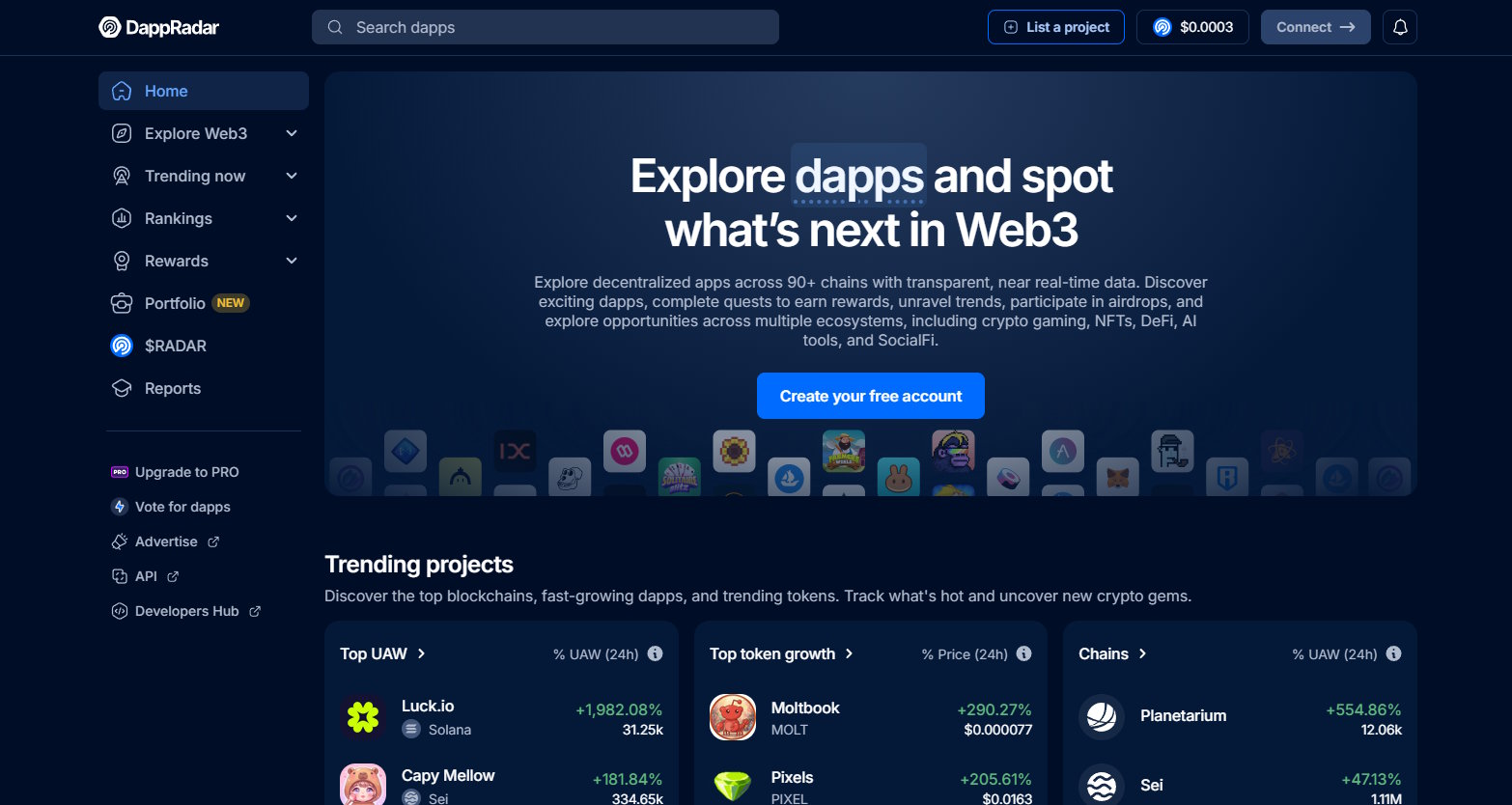
DappRadar rounds out our top 5.
Positive
- ✅ dApp usage analytics and rankings
- ✅ NFT collection tracking and analytics
- ✅ DeFi protocol TVL and yield data
Negatives
- ✗ Limited advanced features
Rarible
#5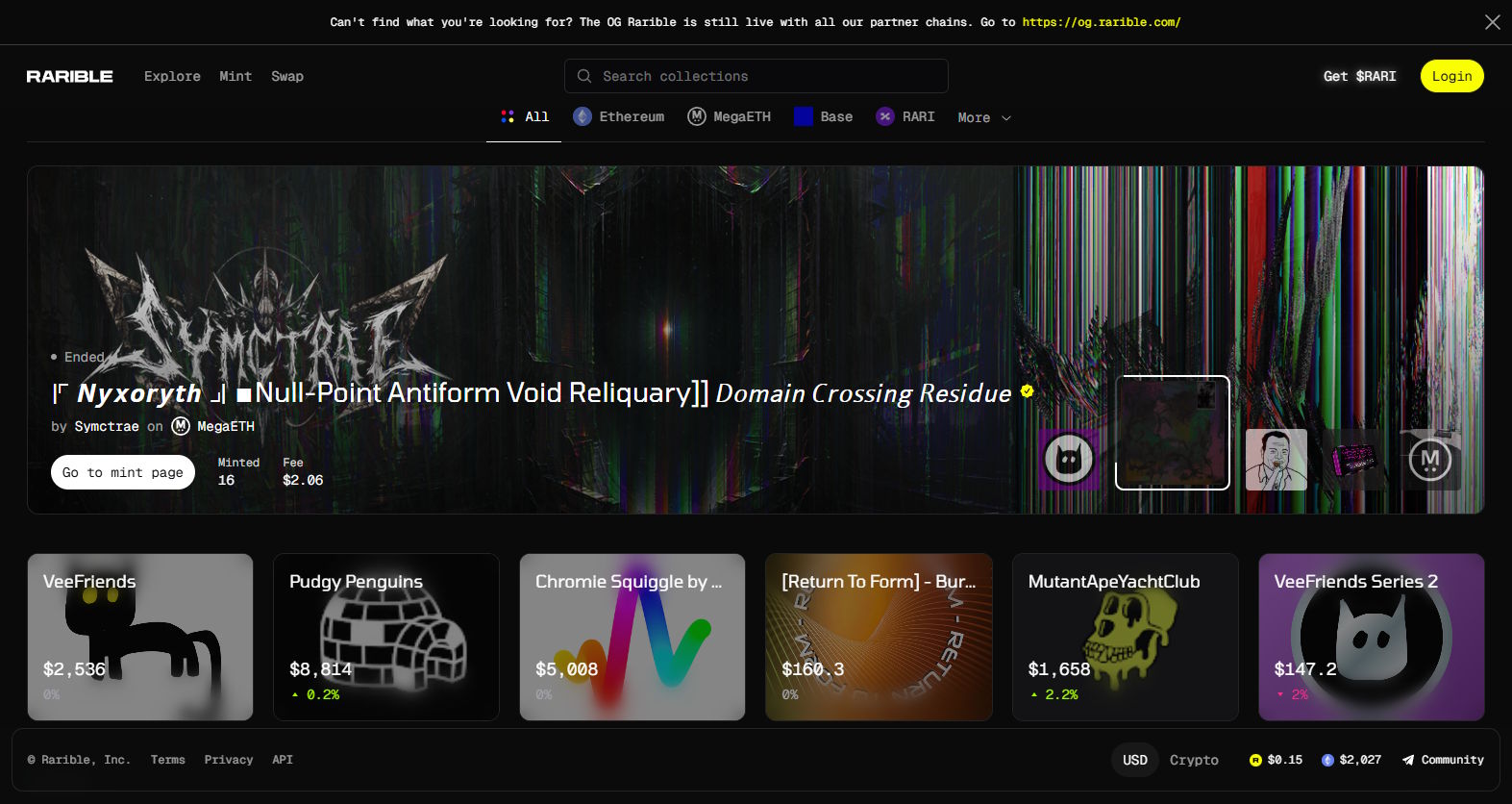
Rarible distinguishes itself through its creator-centric philosophy and community governance model. The RARI token gives creators a stake in platform governance, enabling the community to vote on fee structures, featured collections, and platform direction — a Web3 ethos that OpenSea’s centralized model doesn’t offer. The multi-chain support (Ethereum, Tezos, Polygon) and open-source smart contracts make it the most technically open major NFT platform.
The creator tools for minting, listing, and running auctions are well-designed, and Rarible’s Launchpad has become a meaningful venue for new collection launches. For artists and creators who want to mint and sell with maximum control and minimum platform dependence, Rarible’s infrastructure and community ownership model is the principled choice.
Positive
- ✅ Creator-owned governance via RARI token
- ✅ Open-source smart contract infrastructure
- ✅ Multi-chain: Ethereum, Tezos, Polygon
- ✅ Strong creator tools for minting and auctions
- ✅ Launchpad for new collection launches
- ✅ Community governance over platform decisions
Negatives
- ✗ Lower trading volume than OpenSea or Blur
- ✗ Governance token value highly volatile
- ✗ Less brand recognition among mainstream NFT buyers
Our Testing Methodology
We tested each platform with 25 crypto and NFT research tasks: price tracking, collection analysis, DeFi yield research, exchange comparison, and trading execution. Scored on data accuracy (35%), feature depth (25%), independence (15%), UX (15%), and free access (10%). All crypto data cross-referenced against on-chain sources.