Google Scholar (case law) leads our ranking with a score of 8.8/10.

- ✓ CoCounsel AI for natural language legal research
- ✓ AI-generated case summaries and analysis
- ✓ Validates AI answers against source documents
- ✓ Contract review and analysis tools
- ✓ 1B+ source documents
- ✓ Acquired by Thomson Reuters

- ✓ Case law from all US federal and state courts
- ✓ Citation analysis — how often cases are cited
- ✓ Search within opinions for specific phrases
- ✓ Link to secondary sources and law review articles
- ✓ Free — powerful enough for many legal tasks
- ✓ Integrated with Google Search relevance signals

- ✓ Used by 650,000+ legal professionals
- ✓ AI-assisted research and case summaries
- ✓ Bad law detection — flags overruled precedents
- ✓ Jurisdiction-specific filtering
- ✓ Citator service identifies treatment of cases
- ✓ Available through many state bar associations

- ✓ 1B+ legal documents — free and open access
- ✓ Court opinions from all federal jurisdictions
- ✓ PACER alternative for some federal documents
- ✓ Alert system for new filings
- ✓ Open source — data available for download
- ✓ Supported by Princeton and Harvard Law

- ✓ Free legal resources for lawyers and the public
- ✓ Federal and state case law database
- ✓ Regulatory law and US Code access
- ✓ Attorney and law firm directory
- ✓ Legal news and analysis
- ✓ No account required
In-Depth Reviews
Casetext
#1 Pick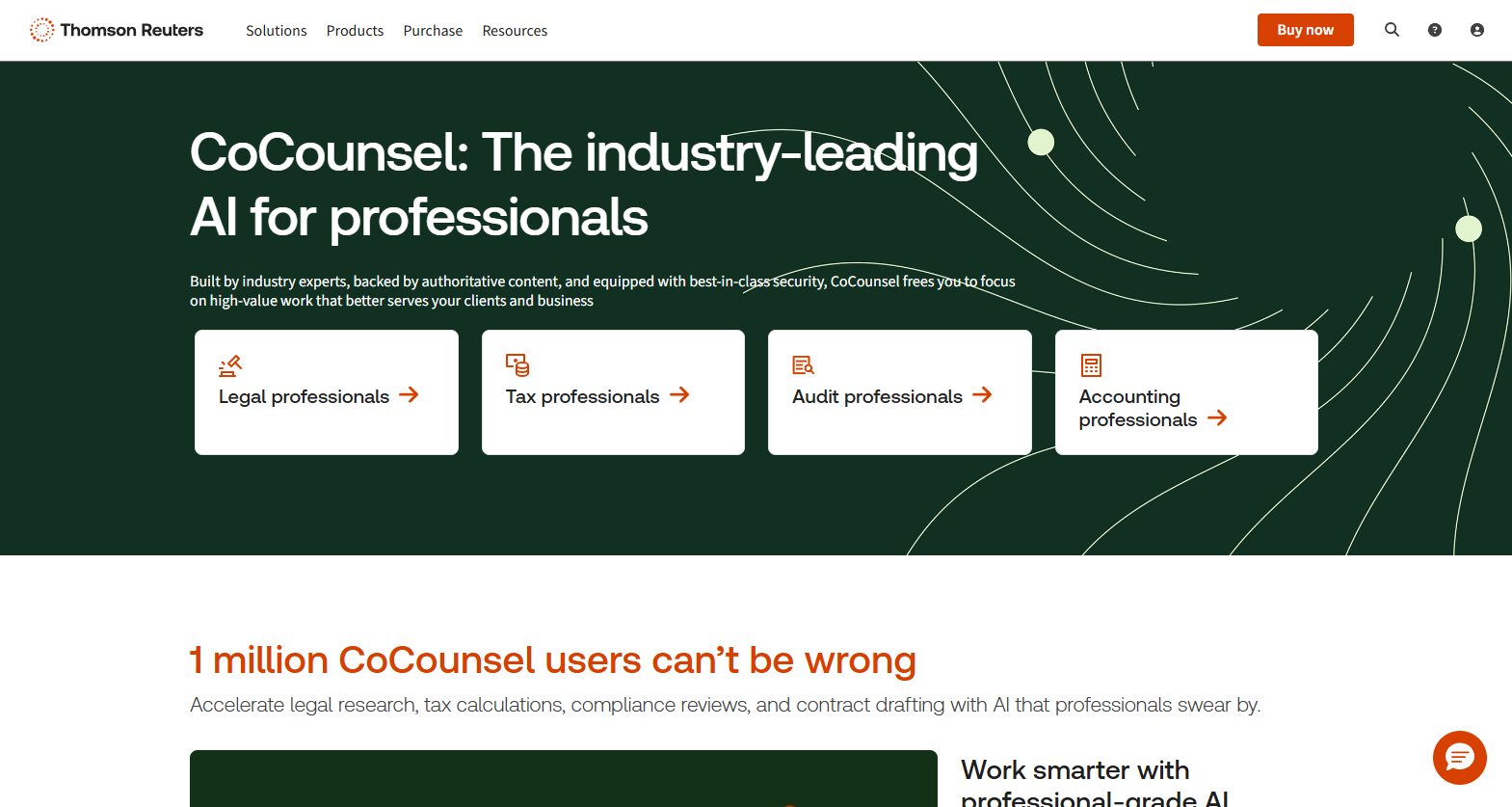
Casetext’s CoCounsel represents the most advanced AI application in legal research to date. Instead of searching for cases and reading them yourself, CoCounsel reads the cases for you — answering research questions in natural language with specific citations, case summaries, and analysis of how courts have treated specific legal issues. Thomson Reuters’ acquisition in 2023 has accelerated development and expanded the source document library to 1B+.
Contract review and analysis tools let attorneys upload agreements and ask questions about specific provisions, potential risks, and missing clauses — work that previously required hours of manual review. The AI validates its answers against source documents, reducing hallucination risk. For firms evaluating AI legal research tools, Casetext’s CoCounsel consistently tops independent capability evaluations.
Positive
- ✅ CoCounsel AI provides natural language legal research answers
- ✅ AI validates answers against source documents
- ✅ Contract review and clause analysis
- ✅ 1B+ source documents post-Thomson Reuters integration
- ✅ Best AI legal research tool in independent evaluations
- ✅ Time-stamps and cites sources for every AI answer
Negatives
- ✗ Expensive — enterprise pricing
- ✗ AI answers require professional verification before use
- ✗ Best features require significant subscription investment
Google Scholar (case law)
#2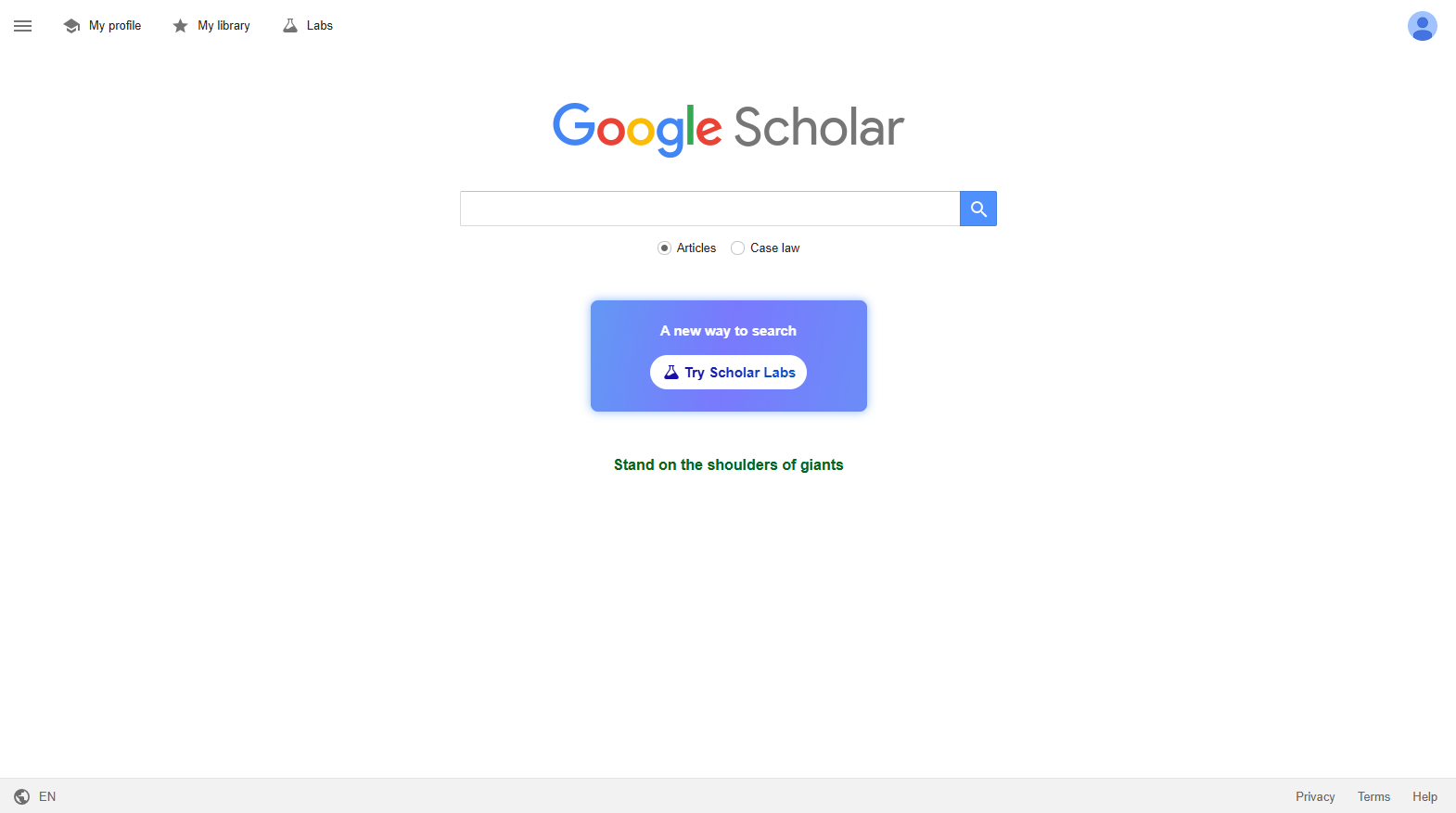
Google Scholar’s case law database is the most accessible free legal research tool available to lawyers and laypeople alike. All federal and state court opinions are indexed with Google’s search technology, enabling full-text search across the entire body of US case law. The citation analysis shows how often a case has been cited and by which courts — a rough but useful indicator of a case’s precedential weight.
For law students, solo practitioners, and legal self-help users who need competent case law research without Westlaw or LexisNexis subscription costs, Google Scholar covers the majority of everyday research needs. The integration with Google’s relevance algorithms means natural language queries return useful results without requiring legal citation expertise. The main professional limitation: it lacks the sophisticated citator services that identify whether a case remains good law.
Positive
- ✅ Free access to all federal and state court opinions
- ✅ Full-text search across entire US case law corpus
- ✅ Citation count as precedential weight indicator
- ✅ Natural language search — no citation expertise required
- ✅ Integrated with secondary sources and law review articles
- ✅ No account required
Negatives
- ✗ No citator — can't confirm if a case is still good law
- ✗ No bad law detection for overruled precedents
- ✗ Less sophisticated than Westlaw or LexisNexis for professional research
Fastcase
#3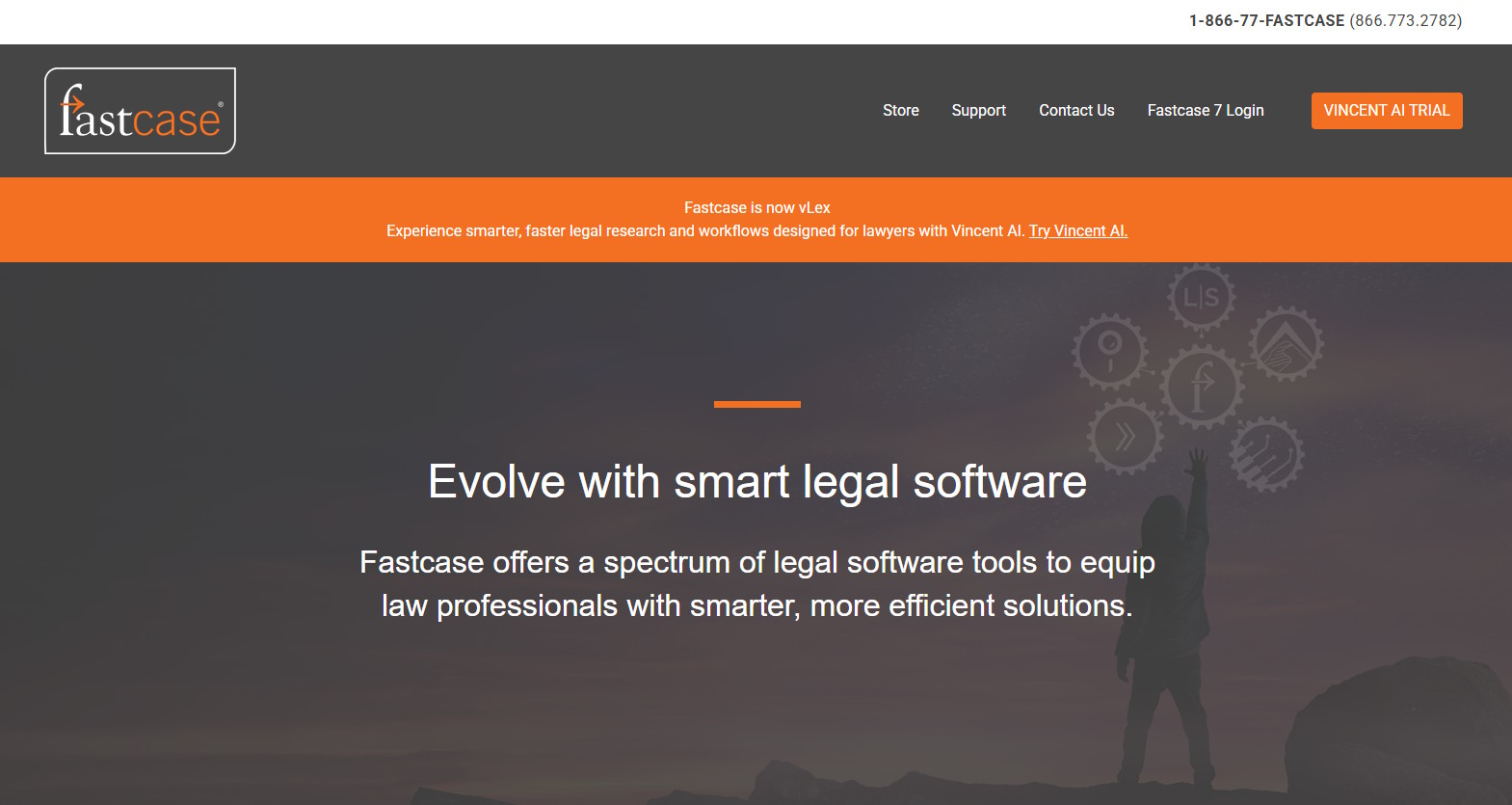
Fastcase is the most widely deployed professional legal research platform that most people outside the legal profession have never heard of. Used by 650,000+ attorneys and available as a member benefit through most US state bar associations (meaning millions of lawyers have free access), it combines comprehensive case law with AI-assisted research and a citator service that flags overruled and questioned precedents.
The bad law detection feature is professional-grade: it identifies cases that have been overruled, distinguished, questioned, or limited — essential information for any attorney who needs to cite precedent with confidence. AI summaries reduce time-to-relevant-case significantly. For practicing attorneys who have it through bar membership, Fastcase is the everyday research tool that makes LexisNexis and Westlaw subscriptions optional for most research tasks.
Positive
- ✅ Bad law detection — flags overruled and questioned precedents
- ✅ 650,000+ legal professional users
- ✅ Often free through state bar association membership
- ✅ AI case summaries for faster research
- ✅ Jurisdiction-specific filtering
- ✅ Comprehensive federal and state coverage
Negatives
- ✗ Less comprehensive than Westlaw for some specialized areas
- ✗ Requires bar membership for free access
- ✗ AI features still maturing relative to Casetext's CoCounsel
CourtListener
#4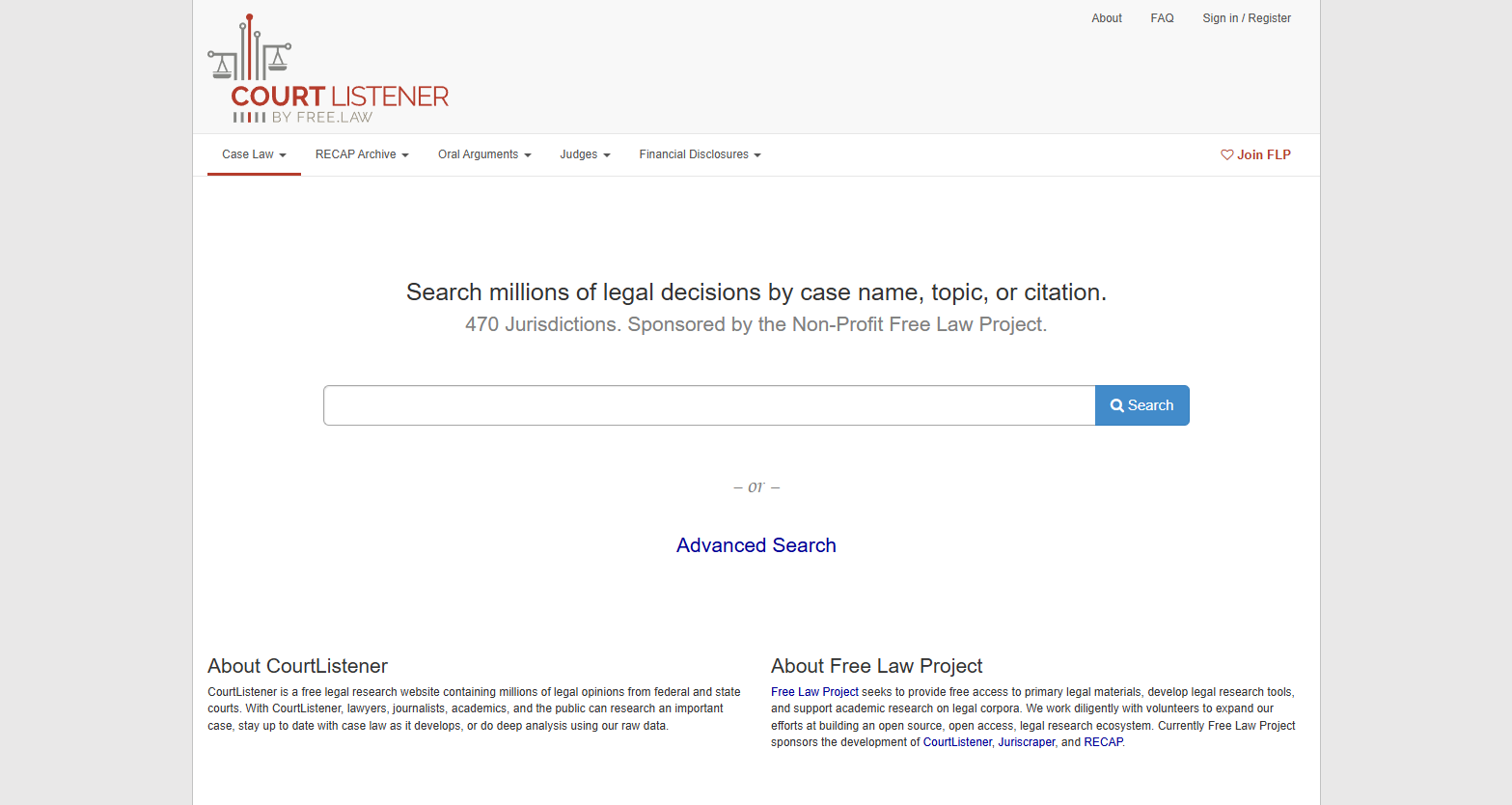
CourtListener is the free, open-source legal database backed by Princeton and Harvard Law, indexing 1B+ legal documents including court opinions, oral argument audio, PACER documents, and judicial financial disclosures. The filing alert system notifies users when new documents are filed in tracked cases — invaluable for journalists, researchers, and litigants monitoring active litigation.
Being open source means the underlying data is downloadable for academic research and legal analytics projects. For journalists covering federal courts, researchers studying judicial behavior, and legal aid organizations serving clients who can’t afford commercial research tools, CourtListener provides professional-grade access at zero cost.
Positive
- ✅ 1B+ legal documents including PACER-accessible records
- ✅ New filing alerts for tracked cases
- ✅ Open source — data available for download
- ✅ Oral argument audio for federal appellate cases
- ✅ Judicial financial disclosure search
- ✅ Supported by Harvard and Princeton law research
Negatives
- ✗ Less comprehensive citator than Fastcase
- ✗ Search interface less intuitive for non-lawyers
- ✗ No AI research assistance
Justia
#5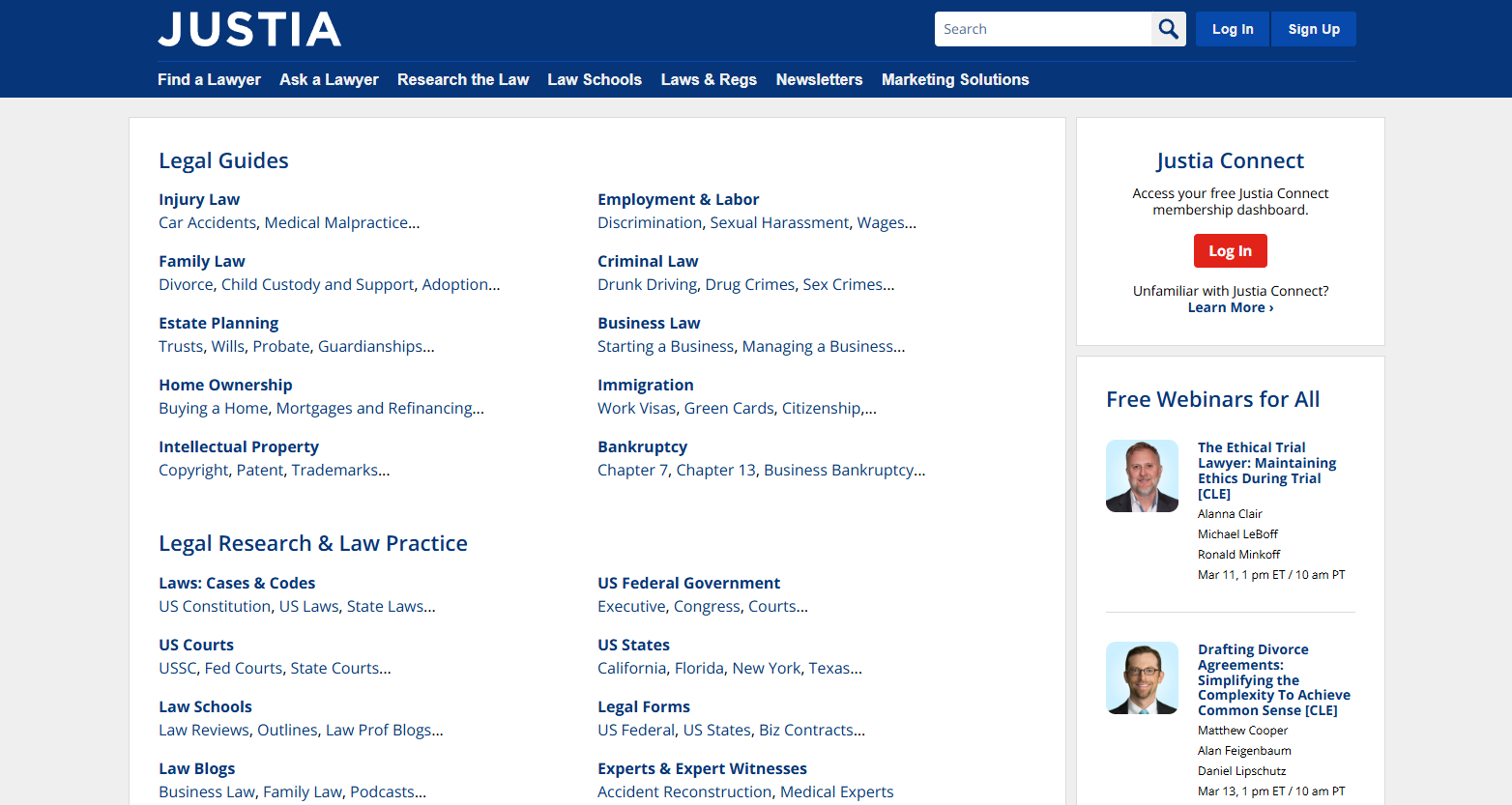
Justia rounds out our top 5.
Positive
- ✅ Free legal resources for lawyers and the public
- ✅ Federal and state case law database
- ✅ Regulatory law and US Code access
Negatives
- ✗ Limited advanced features
Our Testing Methodology
We tested each platform with 20 legal research tasks: case law search by topic, citation checking, finding recent precedents in specific circuits, contract issue research, and statute lookup. Scored on coverage (30%), citator quality (25%), AI research features (20%), ease of use (15%), and cost (10%). Tasks reviewed by a licensed attorney.