Google Scholar leads our ranking with a score of 9.4/10.

- ✓ 400M+ scholarly documents indexed
- ✓ Citation tracking — see who cited any paper
- ✓ Author profiles with h-index and citation counts
- ✓ Full-text search across PDFs when available
- ✓ My Library for saving and organizing papers
- ✓ Related articles and 'Cited by' chains
- ✓ 35M+ biomedical and life science citations
- ✓ Maintained by the NIH — highest authority source
- ✓ Advanced MeSH (Medical Subject Headings) filters
- ✓ Clinical trial and systematic review filters
- ✓ Full text via PubMed Central (PMC)
- ✓ Free access — no subscription required

- ✓ AI-powered paper summaries (tldr)
- ✓ 220M+ papers across all academic disciplines
- ✓ Research Fields of Study taxonomy
- ✓ Highly influential citations highlighted
- ✓ Author disambiguation and researcher profiles
- ✓ Open access PDF links where available

- ✓ 250M+ works from 25,000+ data sources
- ✓ Open, free API with no usage limits
- ✓ Replaces Microsoft Academic — broader coverage
- ✓ Funder and institutional affiliation data
- ✓ Open access availability status for every paper
- ✓ Citation network graphs and analytics

- ✓ 330M+ academic documents from 10,000+ sources
- ✓ European-focused with strong humanities coverage
- ✓ OAI-PMH protocol for institutional repositories
- ✓ Subject-specific search across all disciplines
- ✓ No registration required
- ✓ Indexes theses, reports, and grey literature
In-Depth Reviews
Google Scholar
#1 Pick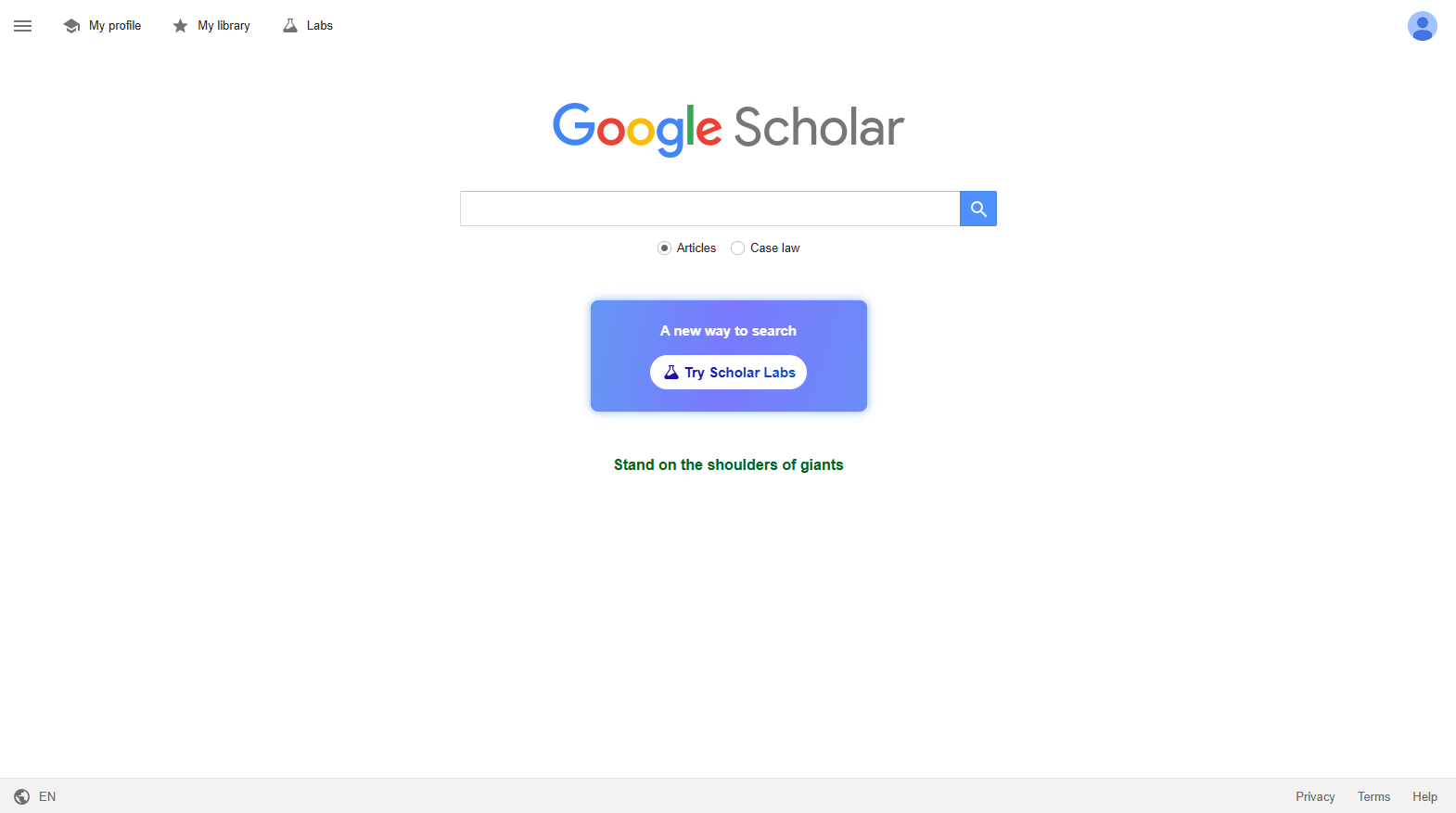
Google Scholar is the entry point for academic research that everyone uses and no one fully appreciates. With 400 million+ scholarly documents spanning every academic discipline, it is by far the largest freely accessible academic search engine. The citation tracking is its killer feature: find one relevant paper, then trace forward through who cited it and backward through what it cites, constructing a web of related scholarship in minutes.
Author profiles aggregate publication history, citation counts, and h-indices, making it easy to assess an author’s standing in a field. My Library lets you organize saved papers. The main limitation is transparency — Google doesn’t publish exactly how it indexes or ranks papers, which means some high-quality publications may be missed while others from predatory journals may appear.
Positive
- ✅ 400M+ papers — the largest academic search database
- ✅ Citation tracking forward and backward through scholarship
- ✅ Author profiles with h-index and citation analytics
- ✅ Full-text PDF access where available
- ✅ My Library for organizing research
- ✅ Free with no account required for basic use
Negatives
- ✗ Indexes some predatory journals without differentiation
- ✗ Non-transparent ranking algorithm
- ✗ No AI paper summaries — you read full abstracts
PubMed
#2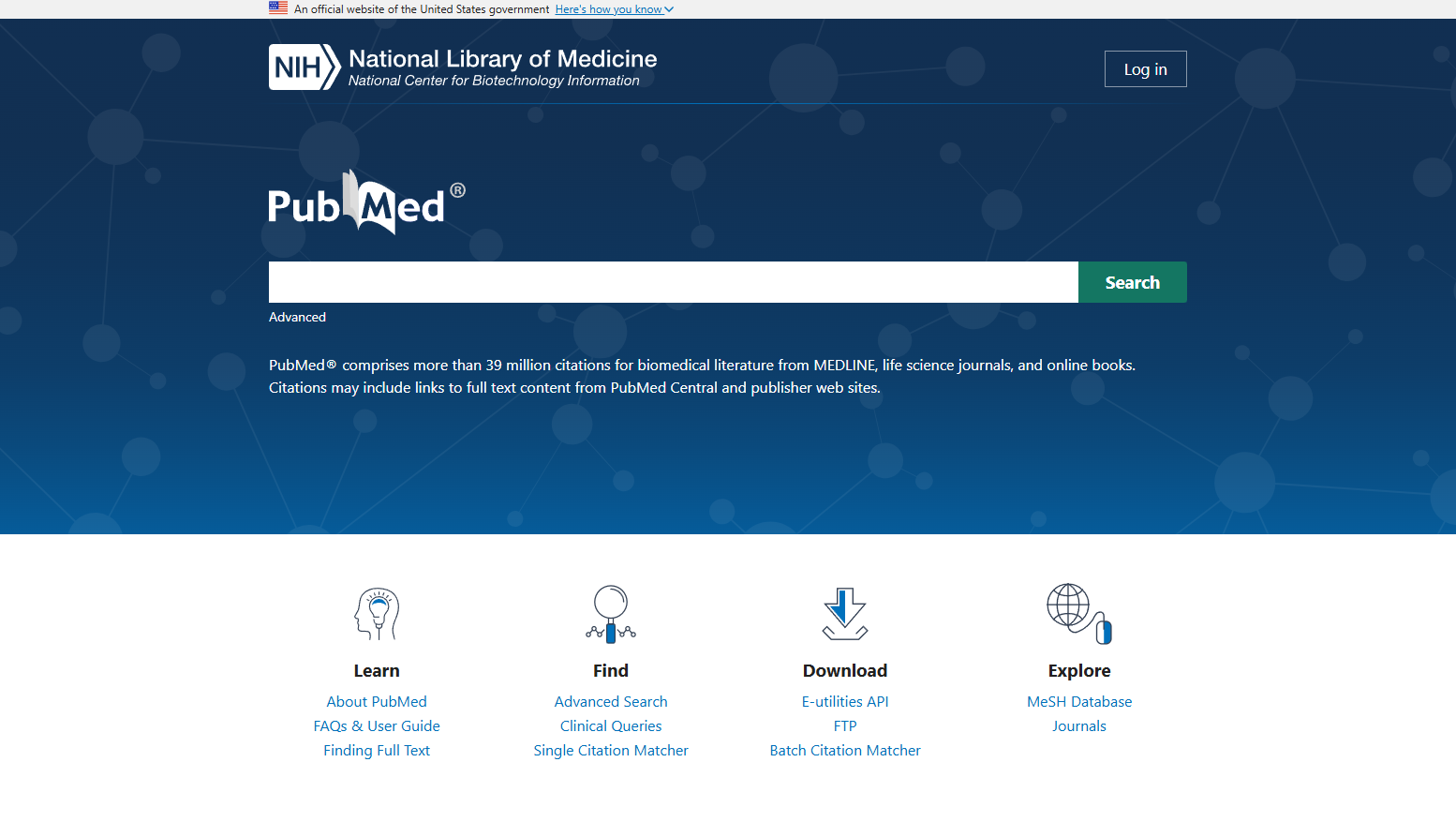
PubMed is the authoritative database for biomedical and life sciences research, maintained by the National Library of Medicine (NIH). With 35M+ citations and the weight of US federal government infrastructure behind it, PubMed is the gold standard for medical and life science literature. MeSH (Medical Subject Headings) controlled vocabulary filtering enables precision searching that free-text approaches can’t match — essential for systematic reviews and clinical research.
PubMed Central provides full-text access to millions of open access papers. Clinical trial, meta-analysis, and systematic review filters are invaluable for evidence-based medicine. For anyone doing biomedical research, PubMed is non-negotiable — it’s not the most user-friendly interface, but its data authority and coverage are unmatched in its domain.
Positive
- ✅ 35M+ biomedical citations — NIH-maintained gold standard
- ✅ MeSH controlled vocabulary for precision filtering
- ✅ Clinical trial and systematic review filters built-in
- ✅ Free full-text via PubMed Central (PMC)
- ✅ Highest citation authority in medical research
- ✅ 100% free — no subscription required
Negatives
- ✗ Biomedical-only — not useful for other disciplines
- ✗ Interface is functional but dated
- ✗ No AI features or paper summaries
Semantic Scholar
#3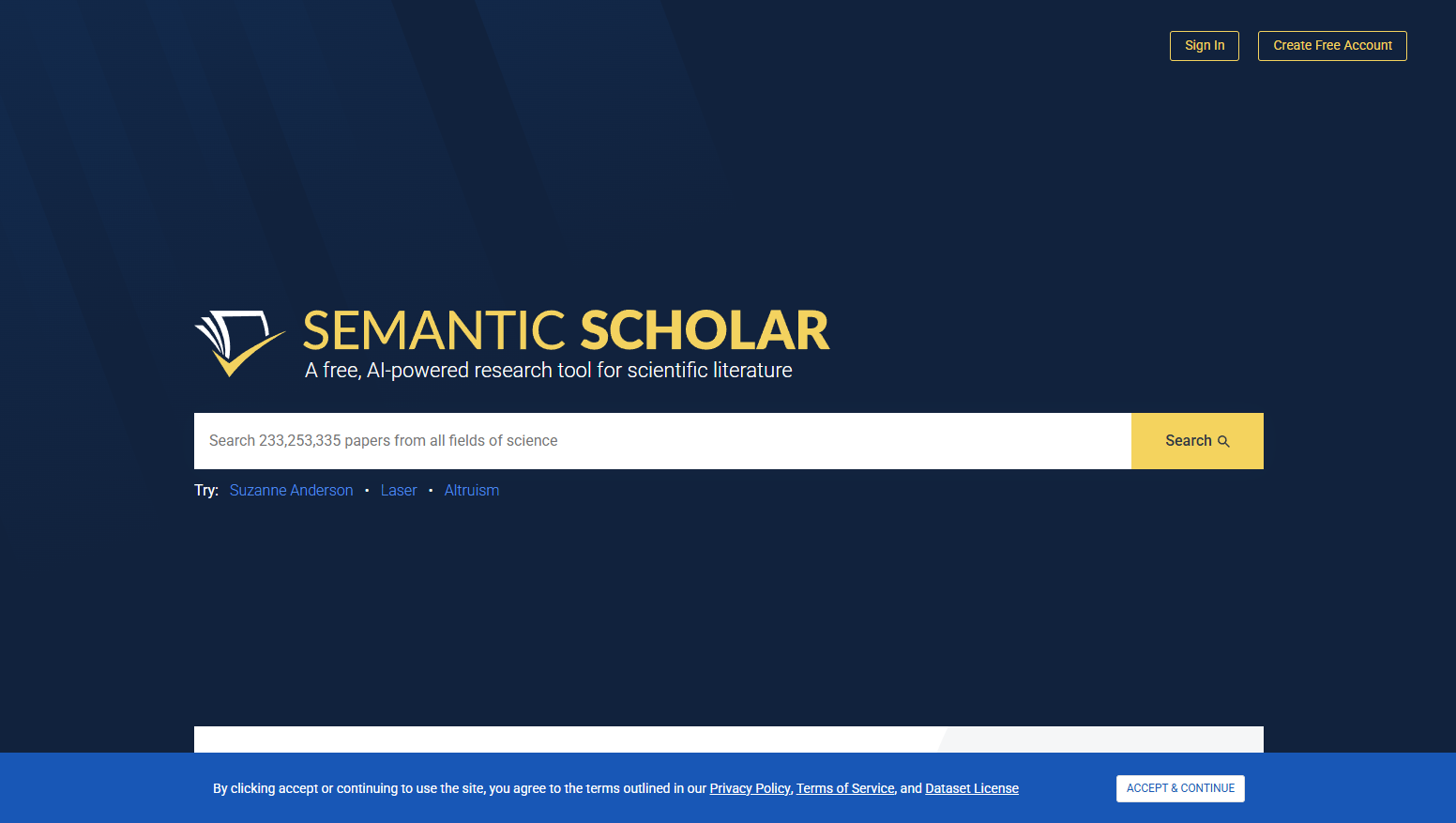
Semantic Scholar from the Allen Institute for AI approaches academic search with the intelligence of modern machine learning. Its tldr (too long; didn’t read) feature generates AI summaries of papers, letting researchers rapidly assess relevance before reading full papers or abstracts. Highly Influential Citations are algorithmically identified — not just counted — to help distinguish impactful work from citation padding.
With 220M+ papers and a citation graph that understands conceptual relationships between papers, Semantic Scholar surfaces related work that keyword search alone would miss. The Research Fields of Study taxonomy makes cross-disciplinary discovery more structured. For researchers doing large-scale literature reviews, the combination of AI summaries and citation intelligence makes it a genuine upgrade over pure keyword-based tools.
Positive
- ✅ AI tldr summaries let you scan 10x more papers in the same time
- ✅ Highly Influential Citations filter by impact, not just count
- ✅ 220M+ papers with citation network intelligence
- ✅ Research Fields taxonomy for cross-disciplinary discovery
- ✅ Author disambiguation reduces false-attribution confusion
- ✅ Free to use — no subscription required
Negatives
- ✗ Smaller index than Google Scholar
- ✗ Coverage weaker in humanities and social sciences
- ✗ AI summaries occasionally miss nuance in complex papers
Microsoft Academic (now OpenAlex)
#4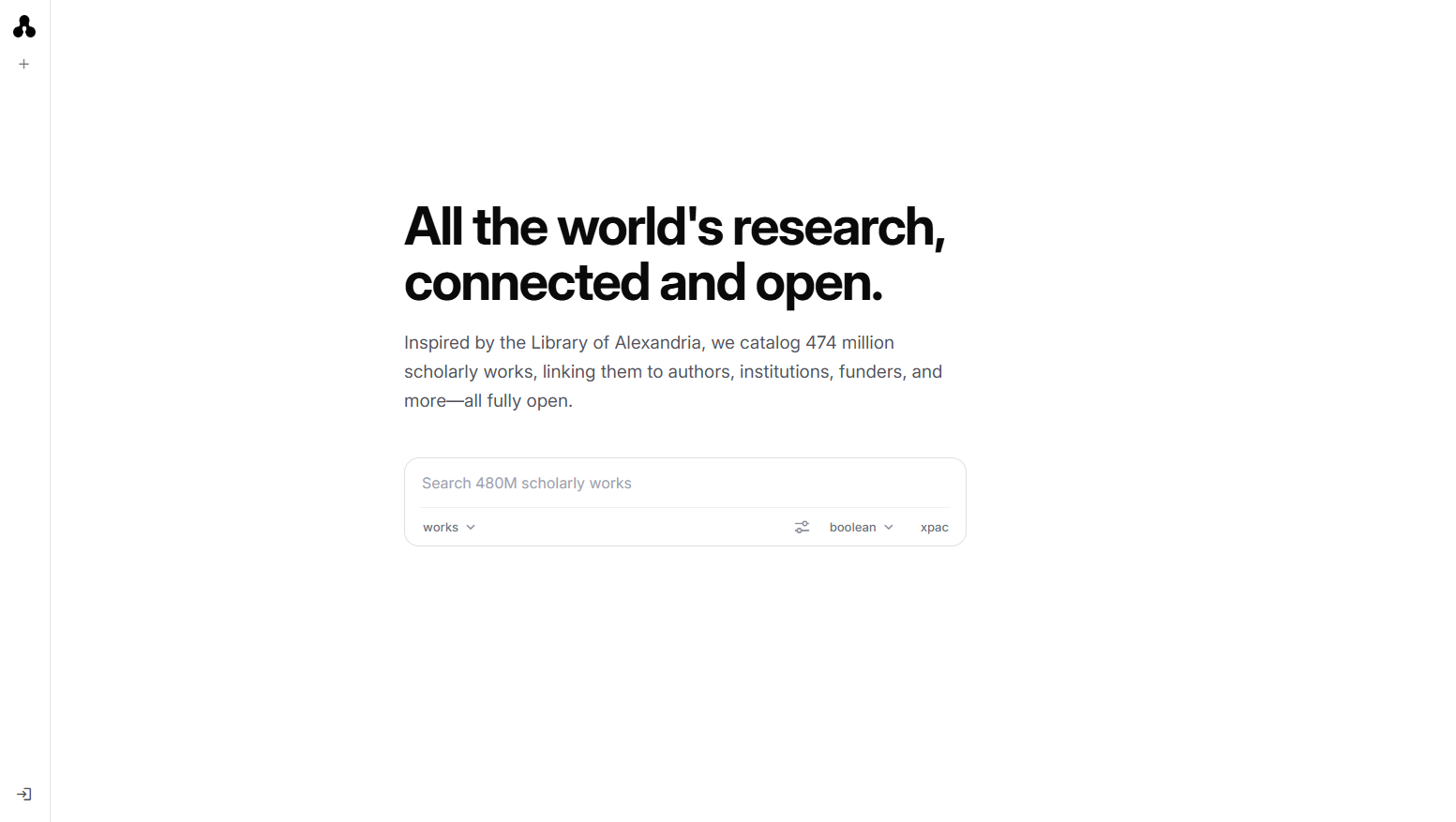
Microsoft Academic (now OpenAlex) rounds out our top 5 with solid basic functionality.
Positive
- ✅ 250M+ works from 25,000+ data sources
- ✅ Open, free API with no usage limits
- ✅ Replaces Microsoft Academic — broader coverage
Negatives
- ✗ Limited advanced features
BASE
#5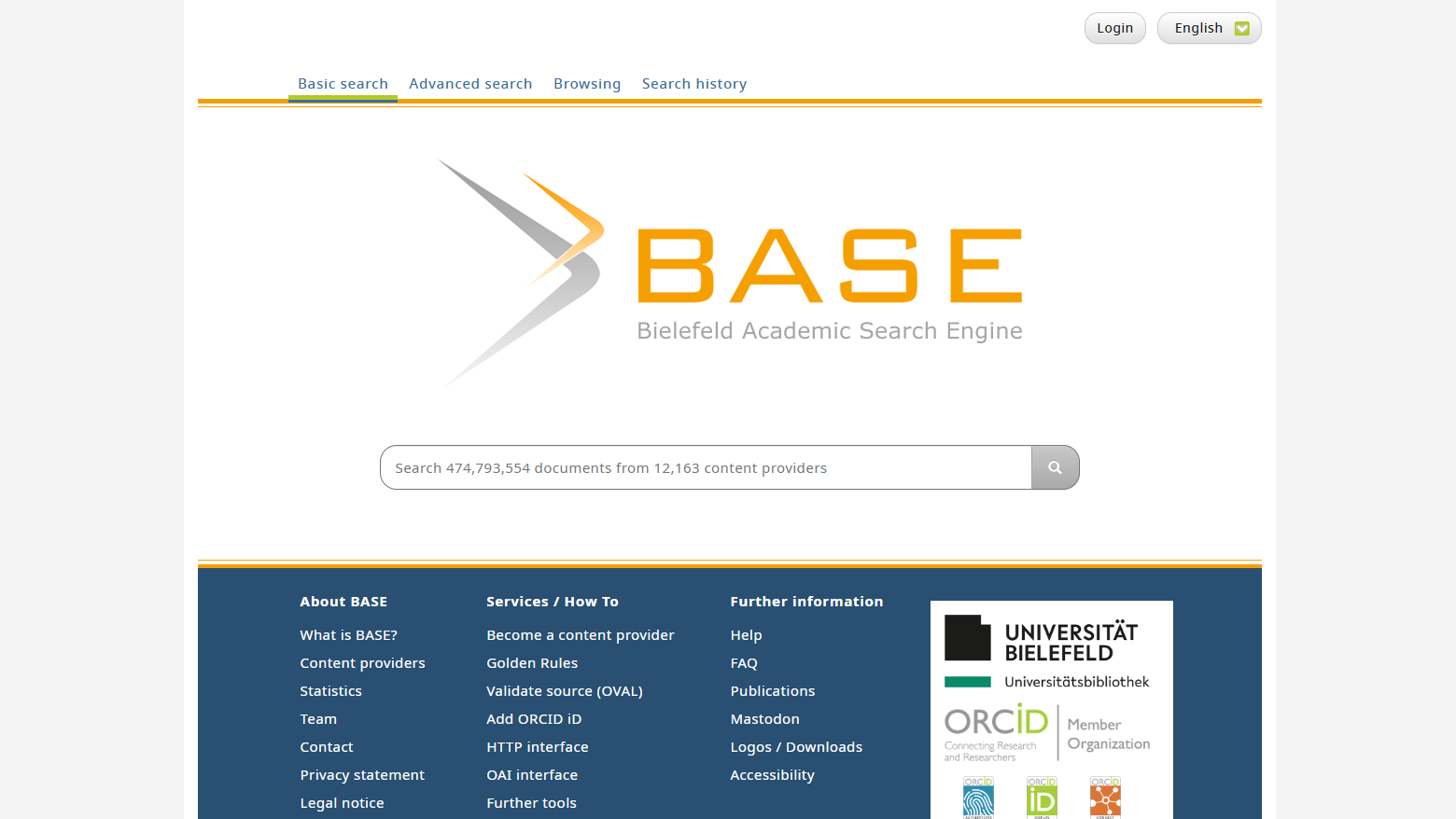
BASE (Bielefeld Academic Search Engine) is a German-built academic search engine that indexes 330M+ documents from 10,000+ institutional repositories, open access journals, and academic publishers. Its particular strength is humanities, social sciences, and European institutional content — areas where Google Scholar’s coverage can be uneven. Theses, dissertations, working papers, and grey literature are indexed alongside peer-reviewed journals.
The OAI-PMH protocol integration means BASE connects directly to the output of university repositories worldwide. No registration is required and search is free. For researchers in humanities, education, or social policy who need comprehensive coverage of European academic output, BASE offers depth that no US-centric database matches.
Positive
- ✅ 330M+ documents from 10,000+ institutional repositories
- ✅ Strong humanities and social science coverage
- ✅ Indexes theses, dissertations, and grey literature
- ✅ European institutional content is best-in-class
- ✅ No registration required
- ✅ Free access with no query limits
Negatives
- ✗ Less useful for physical sciences and engineering
- ✗ Interface is purely functional with minimal features
- ✗ No citation tracking or author profiles
Our Testing Methodology
We tested each engine with 60 academic queries across 6 disciplines: medicine, computer science, economics, humanities, physics, and social sciences. Scored on coverage and index size (30%), citation tracking (20%), special features like AI summaries (20%), open access availability (15%), and interface usability (15%). Queries designed to test breadth across both popular and niche research topics.